

Key takeaways
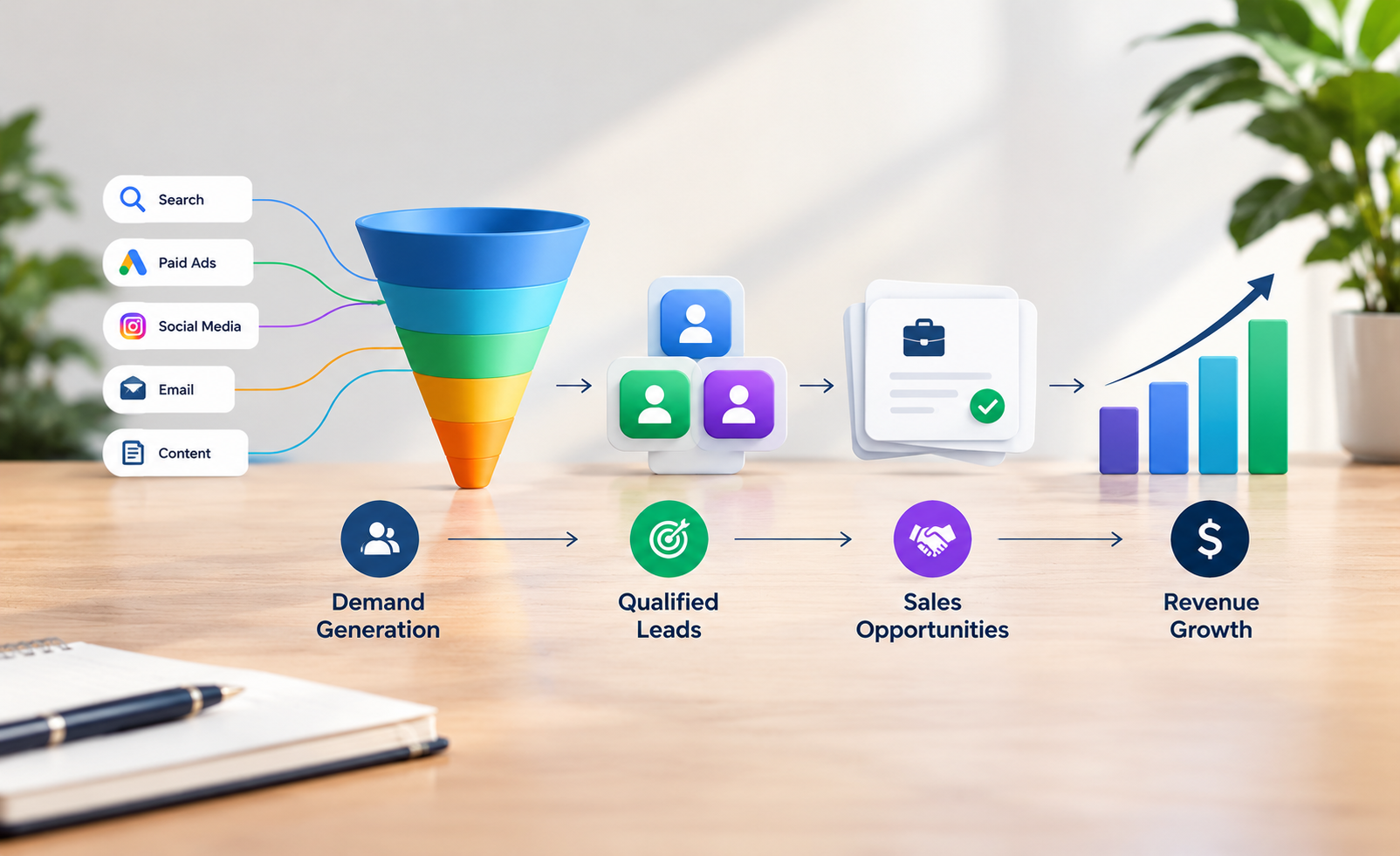
- A website is a revenue system, not a digital brochure. The right agency connects development decisions to acquisition, conversion and retention.
- Judge technical quality through real evidence: performance data, accessibility, security, analytics and documented ownership – not polished mock-ups alone.
- Melbourne businesses should prioritise agencies that can translate customer behaviour into an information architecture and conversion path built to move revenue.
- Scope, platform and support model should follow the commercial problem. A simple lead-generation site and a complex eCommerce rebuild require very different teams and budgets.
A search for a web development agency often starts with a visual question: which agency builds the best-looking websites? That is understandable, but it is not the question that protects a marketing budget. A website can look premium, win internal approval and still underperform because the user journey is unclear, pages load slowly, tracking is incomplete or the CMS makes routine changes unnecessarily difficult.
For founders, CMOs and marketing managers, the better question is: can this agency build a website that supports measurable growth? That requires strategy before design, technical discipline during development and a clear plan for what happens after launch.
What a web development agency in Melbourne should solve
Web development is the work of turning a digital strategy, design and content structure into a functioning website. It covers front-end development, which is what users see and interact with, and back-end development, which handles data, integrations, administration and business logic.
That definition matters because development work has consequences far beyond appearance. A poor platform decision can create expensive maintenance. An unclear navigation structure can suppress organic search visibility. A contact form that does not pass source data into a CRM can make paid media optimisation far less reliable.
The strongest agencies begin with the commercial context. They ask what the business sells, who makes the buying decision, how leads are qualified, where customers abandon, which channels drive demand and what counts as a valuable conversion. Only then can they recommend the right website structure, technology and measurement plan.
For example, a professional services firm may need authority-building content, strong service pathways and CRM-connected lead capture. An eCommerce retailer may need fast collection pages, persuasive product information, reliable inventory integrations and a checkout designed to reduce friction. Treating both projects as a collection of templates is how websites become costly brochures.
Start with the business case, not the build list
Before requesting proposals, define the decision the website needs to support. Is the priority to generate qualified enquiries, increase online revenue, improve lead quality, consolidate several legacy sites, enter a new market or reduce reliance on developers for everyday updates?
A useful brief includes baseline performance. Record current organic traffic, conversion rate, lead volume, sales-qualified lead rate, average order value, revenue attributed to the site and the known weaknesses of the existing platform.
If the business does not have clean data, say so. An agency should identify the measurement gaps rather than invent confidence around incomplete numbers.
It is also worth separating required outcomes from preferred solutions. “We need a new Shopify site” may be correct, but it is a solution. “We need to improve mobile conversion while reducing product administration time” is an outcome. The latter creates room for better strategic advice.
Evaluate the agency beyond its portfolio
A portfolio is useful for assessing visual judgement and range, but it does not reveal whether an agency can solve technical or commercial problems. Ask for case studies that explain the starting position, the strategic choices made, the delivery constraints and the measured result. Revenue, qualified leads, conversion rate, page speed and operational efficiency are more meaningful than vague claims of “increased engagement”.
Use the following comparison framework when assessing proposals:
| Evaluation area | What good looks like | Warning sign |
|---|---|---|
| Discovery | Customer research, analytics review, competitor analysis and clear conversion goals | Design begins before requirements are validated |
| Information architecture | Navigation and page hierarchy based on search intent and buyer needs | Every page receives equal prominence |
| Platform recommendation | A reasoned choice based on content, commerce, integrations and internal capability | A preferred platform is prescribed for every project |
| Performance | Testing plan for mobile speed and Core Web Vitals | Speed is treated as a post-launch tidy-up |
| Measurement | GA4, consent, CRM and conversion events planned before launch | Tracking is added after campaigns start |
| Handover | Documentation, training, access and ownership are explicit | The agency retains control of critical accounts or code |
The process matters as much as the final output. A strategy-first agency should be able to explain who will lead discovery, how decisions are approved, when user testing occurs, how change requests are managed and what quality assurance happens before launch.
Ask for evidence of technical quality
Not every decision-maker needs to read code, but every decision-maker should know what technical quality looks like. A website must work reliably across common browsers and devices, protect user data, remain manageable for internal teams and provide a fast experience on mobile connections.
Google’s Core Web Vitals offer practical reference points. At the 75th percentile of real user visits, Google defines a good Largest Contentful Paint as 2.5 seconds or less, a good Interaction to Next Paint as 200 milliseconds or less, and a good Cumulative Layout Shift as 0.1 or less. These are not vanity metrics. Slow or unstable pages add friction precisely when a visitor is deciding whether to enquire or buy.
Accessibility deserves similar scrutiny. The Web Content Accessibility Guidelines, commonly known as WCAG, provide a recognised framework for making digital content more usable for people with disability. Ask whether the agency tests keyboard navigation, colour contrast, form labels, image alternatives and focus states. Accessibility work improves usability broadly, especially on mobile and in high-pressure purchase journeys.
Security and maintenance should be part of the proposal, not an afterthought. Clarify who applies software updates, monitors uptime, manages backups, tests recovery and responds to vulnerabilities. For sites handling payments, customer data or member accounts, these questions are central to risk management.
Choose the platform for the operating model
Platform debates tend to become tribal. WordPress, Shopify, Webflow and custom-built solutions each have a place. The right choice depends on the business model, internal capability, integration needs and likely rate of change.
Shopify is often a strong fit for businesses focused on eCommerce speed, operational simplicity and established commerce functionality.
WordPress can suit content-heavy businesses that need flexible publishing and extensive integrations, provided it is well governed. Webflow can work well for marketing teams that need more design control and straightforward content updates. A custom build may be justified where the customer experience or operational workflow is genuinely unique, but it carries a higher cost of ownership.
The commercial question is not which platform is best in the abstract. It is whether the platform allows the business to publish, sell, integrate and improve without creating avoidable dependency. An agency that recommends a solution should explain its trade-offs plainly, including licence costs, plugin risk, development constraints and ongoing support requirements.
Treat conversion and analytics as part of development
A website cannot be optimised if the business cannot see what users do. Analytics requirements should be designed alongside the page templates and forms. That includes defining primary conversions, secondary actions, event naming, consent behaviour, CRM fields and the source data required for reporting.
For lead generation, a form submission alone is rarely enough. Track whether the lead was qualified, booked a meeting, became an opportunity and generated revenue. For eCommerce, track product views, add-to-cart events, checkout progression, purchase value, refunds and repeat purchase behaviour. This closes the gap between a website metric and a business outcome.
Conversion design should also address the reasons people hesitate. Clear service positioning, credible proof, transparent delivery expectations, relevant case studies, useful FAQs and low-friction forms can all lift performance. The exact mix depends on purchase risk and customer intent. A high-consideration B2B buyer needs more reassurance than someone replacing a low-cost household item.
For online retail, the cost of friction is especially clear. Baymard Institute’s aggregated research places average cart abandonment at 70.19 per cent across its benchmark studies. No website will eliminate abandonment, but unclear total costs, forced account creation, slow checkout and poor mobile usability are fixable contributors.
Clarify ownership, support and the first 90 days
The contract should make ownership unambiguous. The business should retain control of its domain, hosting account, analytics property, tag manager, advertising accounts, design files and source code or agreed licence rights. Agencies need access to do their work; that does not require the client to lose control of core business assets.
Also ask what support looks like after launch. A launch is the beginning of the learning cycle, not the finish line. In the first 90 days, review technical errors, search indexing, page speed, conversion tracking, user behaviour and feedback from sales or customer service. Prioritise fixes and experiments using commercial impact, not the loudest internal opinion.
The right Melbourne development partner will not promise a website that solves every growth problem. It will build a dependable platform for better marketing decisions, faster experimentation and measurable success. That is the standard worth using when the next rebuild is on the table.