
A page can be technically sound, well written and supported by backlinks, yet still fail to rank or convert. The usual reason is not a missing keyword. It is a mismatch between the page and the job a searcher is trying to get done. So, what is search intent? It is the underlying goal behind a query: the information, comparison, action or destination a person expects Google to deliver.
For brands competing in crowded Australian search results, intent is not an SEO detail. It determines what content to create, which page type has a realistic chance of ranking, and whether traffic is likely to move revenue. Get it wrong and you may earn impressions from people who were never looking for your offer. Get it right and organic search becomes a more efficient acquisition channel.
Key takeaways
- Search intent is the outcome a user wants, not just the words they type.
- Google reveals its interpretation of intent through the live search results page, including page formats, featured snippets, shopping results and local packs.
- The same keyword can carry mixed intent, particularly for product categories and high-consideration purchases.
- A page should satisfy one primary intent before it tries to capture secondary questions.
- Rankings matter, but intent alignment is what turns qualified traffic into measurable success.
What is search intent?
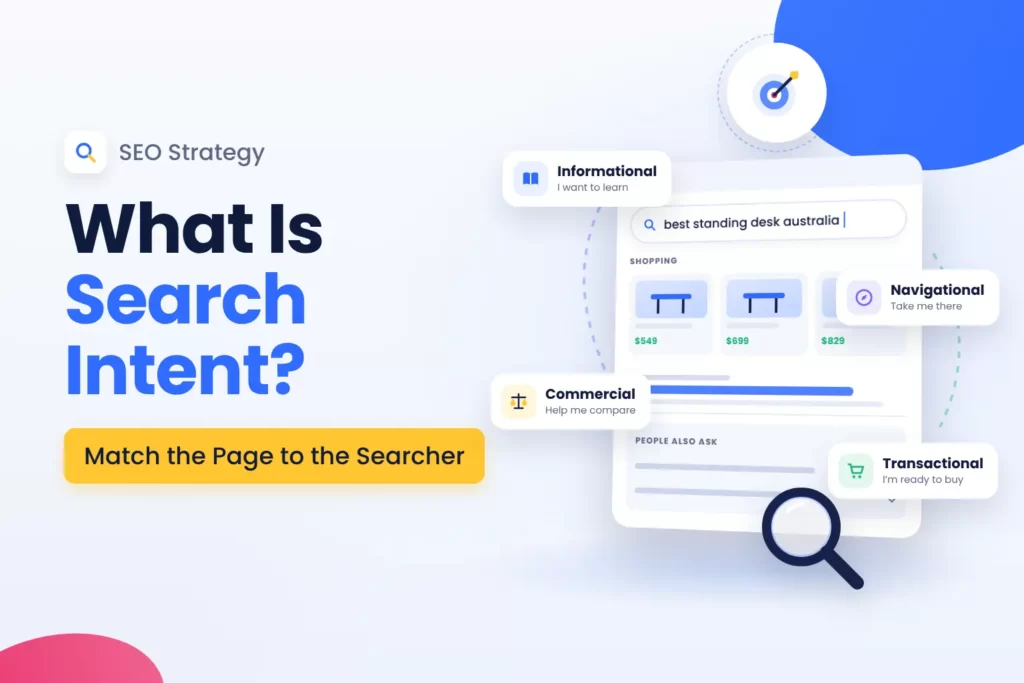
Search intent, sometimes called user intent or keyword intent, describes why someone searches. A person typing “best standing desk Australia” is unlikely to want a history of office furniture. They are researching options, prices, features and retailers. Someone searching “standing desk assembly instructions” needs help using a product they already own. The words overlap, but the commercial opportunity and useful page format are completely different.
Google has spent years improving its ability to infer these distinctions. Its Search Quality Rater Guidelines repeatedly focus on whether results fulfil the user’s needs, while Google Search Central advises publishers to create helpful, people-first content. Neither principle means businesses should ignore keywords. It means a keyword is the starting signal, not the content strategy.
Intent also shifts with context. “Nike Pegasus” might mean product research for one person, a navigational search for the official product page for another, or a transaction for someone ready to buy. Device, location, previous searches and current events can all influence what appears in the results.
The four core types of search intent
The four familiar categories are useful because they force a strategic question: what does the searcher need next?
Informational intent
Informational searches seek an answer, explanation or process. Queries such as “what is customer acquisition cost”, “how does GA4 attribution work” and “why is my Google Ads CPC rising” are informational.
The best result may be an explainer, guide, template, calculator, video or research-led analysis. Commercial relevance can still exist, but forcing a sales page into this result set usually produces a weak experience. The stronger approach is to answer the question clearly, then help the reader progress to the next decision when it is relevant.
Navigational intent
Navigational searches are used to reach a known destination. Examples include “Google Search Console login”, “Shopify admin” or a specific brand name. The user has largely made their choice already.
These terms are rarely an acquisition opportunity unless the brand is yours. They are valuable, however, for protecting branded visibility. A confusing or incomplete branded search result can create friction at the exact moment a prospect is trying to find you.
Commercial investigation intent
Commercial investigation sits between learning and buying. Searchers are weighing options: “best CRM for small business”, “Klaviyo vs Mailchimp”, “electric SUV reviews” or “SEO audit checklist”. They want evidence before they commit.
Comparison pages, category guides, original testing, decision frameworks and transparent pros-and-cons content work well here. This is often where B2B and eCommerce brands can influence a shortlist, provided the content makes a genuine decision easier rather than disguising a pitch as advice.
Transactional intent
Transactional searches signal a desire to complete an action. That may be buying, booking, downloading, subscribing or requesting a quote. Terms such as “buy running shoes online”, “book an eye test” and “project management software free trial” are clear examples.
These users need a low-friction page: relevant products or services, accurate pricing or price signals, availability, trust markers and a direct next step. Educational content may assist the decision, but it should not obstruct it.
Why keyword labels are not enough
Intent classifications are a useful planning tool, not a substitute for analysing the search results. Keyword tools can label a phrase as informational or commercial, but Google’s actual results are the clearest evidence of what it believes satisfies users now.
Search “how to choose a mattress”, for example, and the results may favour detailed guides, retailer advice and videos. Search “queen mattress sale” and product grids, shopping listings and category pages are more likely to dominate. Building a product category page for the first query may be commercially logical from the brand’s perspective, but it is unlikely to be the page format Google prefers.
Mixed intent is common. A query like “best accounting software” may show review publishers, comparison pages, product landing pages and video results together. That does not mean every page can rank. It means Google sees more than one legitimate need. Your task is to identify the dominant format, then choose a defensible angle based on your expertise, evidence and offer.
How to diagnose intent from the SERP
Before assigning a keyword to a content brief, search it in an incognito browser and inspect the first page. Look beyond the blue links. The result page is a market-research asset that shows both demand and expectations.
Start with the ranking page types. Are they product pages, editorial articles, tools, category pages, forums, videos or official documentation? Next, assess the language in titles and snippets. Phrases such as “best”, “review”, “comparison”, “near me”, “price” and “how to” expose the decision stage Google is serving.
Then examine SERP features. Shopping listings usually indicate strong purchase intent. A featured snippet and People also ask questions point to an informational need. Maps and local packs indicate that proximity matters. Video carousels suggest users may prefer a visual explanation. These features are not random decoration. They show the type of answer competing pages must provide.
Finally, look at the freshness of the results. Searches involving software, AI tools, consumer products, tax, legislation or platform updates can change quickly. A page written two years ago may still explain the concept correctly but fail the searcher who needs 2026 information.
Match the content format to the decision stage
Intent should shape the entire page, not merely the heading structure. For informational content, lead with a concise answer and expand through practical explanation, examples and common mistakes. For commercial investigation, give readers criteria they can use to judge alternatives. For transactional pages, prioritise choice, proof and action.
A useful planning formula is:
Search intent + decision stage + credible format = qualified organic opportunity
Consider an online skincare retailer targeting “retinol for beginners”. The searcher probably needs education about strength, skin tolerance, application and product selection. A thin collection page will not meet that need. A practical beginner guide may be a better entry point, with relevant products presented only after the core question has been answered.
Conversely, someone searching “buy 0.3% retinol serum Australia” has supplied a more specific purchase signal. Here, a clear product or collection page is the logical destination. The difference is not subtle: one page earns trust before the purchase; the other reduces friction at purchase time.
Common search intent mistakes that waste organic effort
The most expensive mistake is creating the page the business wants to rank, rather than the page users want to find. This often happens when teams force highly commercial pages onto broad educational keywords because their search volume looks attractive.
Another mistake is targeting a keyword once and assuming intent is solved. Search results change as consumer behaviour changes. A query that once rewarded long-form guides may shift towards product comparisons, videos or forum discussions. Review priority keywords periodically, especially when rankings or conversion rates decline.
Teams also confuse traffic with quality. An informational page can attract thousands of visits while contributing little to pipeline or sales if it has no logical relationship to the brand’s product, audience or next-step content. That does not make the page worthless, but it changes how success should be measured. Track engagement, assisted conversions, email sign-ups and movement to commercial pages alongside rankings.
Turn intent into an operating system
For each priority keyword, document the presumed intent, the live SERP pattern, the audience’s decision stage, the best page format and the conversion action that makes sense. This turns keyword research from a spreadsheet exercise into a content investment decision.
It also improves collaboration between SEO, paid media, content and conversion teams. Paid search query data can expose language used by ready-to-buy customers. On-site search can identify unanswered product questions. Sales calls reveal the objections that comparison content should address. Intent is strongest when it is informed by real customer behaviour, not inferred from a keyword in isolation.
The practical test is simple: if a searcher lands on this page, can they make meaningful progress towards the outcome that prompted their search? When the answer is yes, rankings, engagement and revenue are far more likely to move in the same direction.