


A potential customer asks ChatGPT which warehouse platform suits a growing Australian retailer, how much a CRM implementation should cost, or which sunscreen ingredients are appropriate for sensitive skin. The answer may include web citations, brand recommendations or a concise comparison. That is the commercial reality behind how to appear in ChatGPT search: your business needs to be understood well enough to be retrieved, trusted and used when an answer is formed.
This is not a replacement for SEO. It is a tougher version of it. Traditional rankings can reward a highly optimised page that closely matches a query. AI search systems also need to decide whether the information is specific, current, corroborated and useful in context. Brands that publish vague category pages will find that distinction increasingly expensive.
Key takeaways
- ChatGPT search visibility is earned through useful, citable information – not a separate AI-search trick.
- Strong organic foundations still matter: crawlable pages, clear entities, first-hand expertise and reputable mentions.
- The best opportunity is not merely being named in an answer. It is being selected as the source that helps a buyer make a decision.
- Measure referral quality, assisted conversions and branded demand alongside any AI-search traffic.
What ChatGPT search is actually looking for
ChatGPT search can retrieve current information from the web and present cited answers for relevant queries. Exact source selection varies by query, location, freshness requirements and the information available at the time. There is no reliable submission form, no guaranteed placement and no legitimate way to force a citation.
What you can control is the evidence your brand leaves behind. AI systems need to identify who you are, what you offer, where you operate, which claims you can substantiate and why your information deserves to be included over another source.
Think of this as retrieval readiness. Your content must be accessible to search systems, intelligible in small passages, and credible enough to support a recommendation or factual statement.
| Signal | What it tells an AI search system | Practical priority |
|---|---|---|
| Clear, factual pages | What your business does and who it serves | Define services, products, locations and constraints plainly |
| Original evidence | Why your claim is worth citing | Publish research, methodology, benchmarks and first-hand examples |
| Technical accessibility | Whether content can be discovered and rendered | Resolve crawl blocks, broken canonicals and slow, unstable pages |
| Consistent brand entities | Whether references to your business mean the same thing | Keep names, locations, authors and company facts aligned |
| Independent validation | Whether others recognise your authority | Earn relevant coverage, reviews, expert references and citations |
Build pages that answer decisions, not just keywords
The fastest way to become invisible in AI search is to create content written for no-one in particular. “We provide tailored solutions” gives a language model almost nothing it can use. It does not explain the problem, audience, process, price range, trade-off or expected outcome.
Instead, create pages around the decisions your buyers need to make. For an eCommerce operator, this could mean a guide comparing Shopify migration paths, a breakdown of paid social creative testing, or a benchmark explaining what a viable customer acquisition cost looks like by margin profile. For a B2B business, it may be implementation timelines, procurement requirements, integration limits or a practical comparison of approaches.
Each page should answer the obvious follow-up questions without padding:
- What is this, and who is it for?
- When is it the wrong choice?
- What does it cost, involve or require?
- What evidence supports the recommendation?
- What changes by industry, business size or Australian market conditions?
That final point matters. AI-generated answers are often generic because the underlying web content is generic. Australian-specific guidance on GST, delivery geography, consumer expectations, local regulation or market benchmarks gives a page a defensible reason to appear.
Make key claims easy to extract
AI search frequently works with passages, not just whole pages. A strong article therefore makes its claims explicit. Put the answer near the relevant heading, define terminology, use descriptive tables where comparison is needed, and show the conditions behind any recommendation.
For example, avoid: “Meta ads are ideal for scaling.”
Write: “For Australian eCommerce brands with repeat purchase potential and enough creative volume to test weekly, Meta can be an efficient acquisition channel. It is usually less dependable as a sole growth channel where gross margins are thin, inventory is constrained, or conversion tracking is incomplete.”
The second statement is more useful because it includes scope and limitations. That is what makes content trustworthy for readers and more quotable for AI systems.
Strengthen the technical foundation before chasing AI visibility
If a page cannot be crawled, rendered or interpreted properly, exceptional writing will not rescue it. AI-search visibility begins with the same unglamorous technical controls that underpin organic performance.
Check that important pages are indexable, return a valid status code, use a self-referencing canonical where appropriate and are included in an accurate XML sitemap. Avoid putting essential information only inside images, interactive widgets or gated PDFs. A service page that requires scripts to reveal every meaningful detail is harder for systems to assess and easier for competitors to outrank.
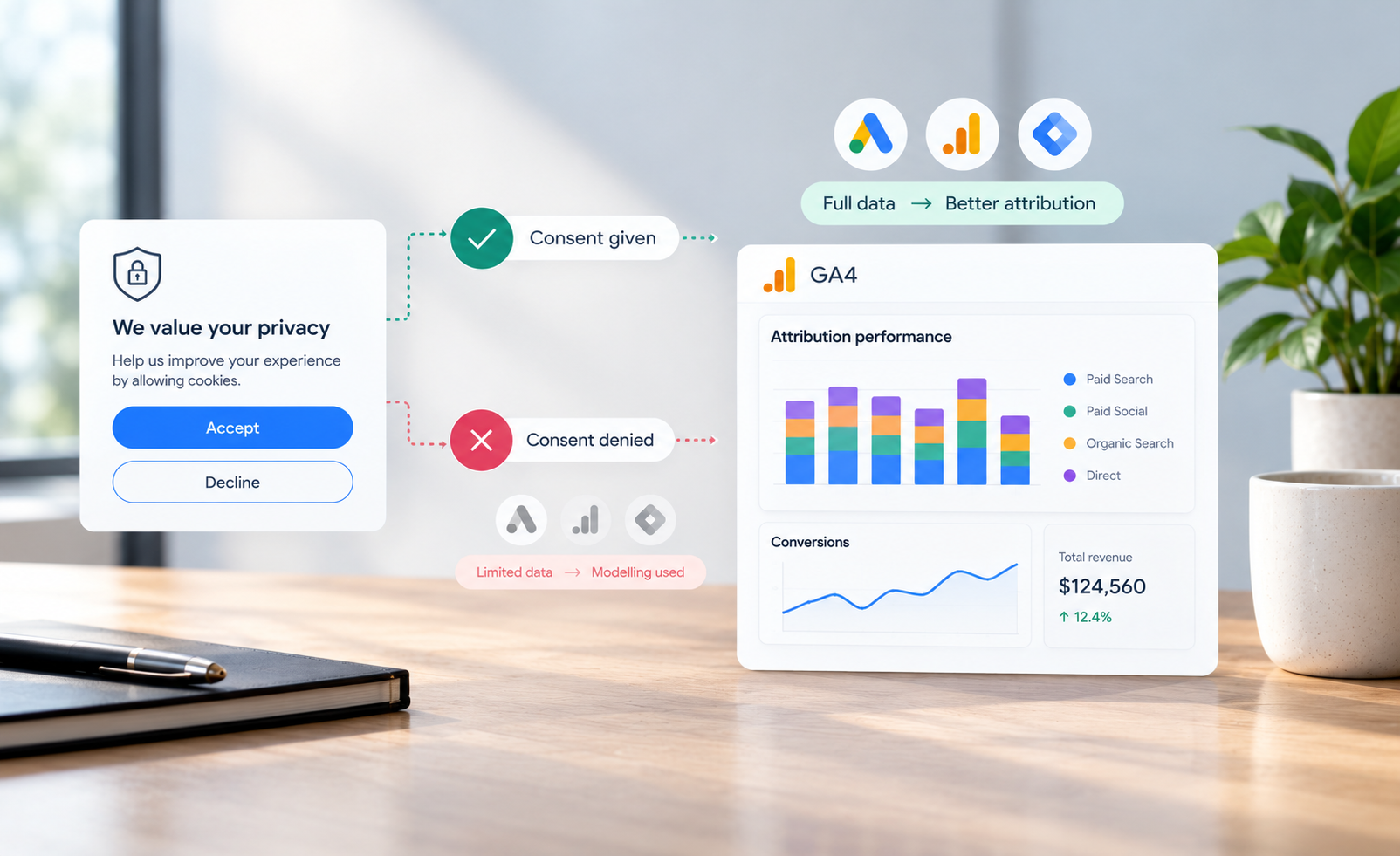
Structured data can help clarify content types and entities, particularly for organisations, products, articles, FAQs, local businesses and authors. It is not a citation button. Markup should reflect visible page content and real-world facts, not wishful marketing claims.
Author pages also deserve attention. Where expert judgement matters, show who wrote or reviewed the piece, their relevant experience and how the content is maintained. A named specialist with a transparent methodology is more credible than an anonymous content factory, particularly in finance, health, legal and high-consideration B2B categories.
Treat entity consistency as a growth asset
An entity is the identifiable thing a search system understands: your company, product, founder, location or methodology. For ChatGPT search, entity clarity reduces ambiguity.
Make sure your company name, operating locations, product names, leadership details and core descriptions are consistent across your website and legitimate third-party profiles. If your Melbourne business is called three variations of the same name across directory listings, social accounts and press mentions, you create unnecessary uncertainty.
This also applies to product data. Publish accurate specifications, availability, pricing logic and support details where commercially appropriate. For local businesses, maintain current hours, address information, service areas and review profiles. The goal is not to be everywhere. It is to be reliably represented wherever buyers and search systems expect to verify you.
Earn evidence that does not come from your own website
A business can say it is an expert. Independent sources make that claim believable. Relevant media coverage, industry association mentions, expert commentary, high-quality reviews, academic references and partnerships can all reinforce authority when they are genuine.
This is where a narrow expertise strategy beats broad content volume. A specialist logistics provider quoted in credible retail coverage may be more useful to an AI answer about fulfilment than a generalist firm with 200 lightly edited blog posts. Relevance and corroboration matter more than sheer publishing output.
Original research is especially valuable. Survey your customer base, analyse anonymised campaign data, publish category benchmarks or document a repeatable test methodology. State sample size, date range, limitations and definitions. Data without context is promotional; data with method becomes citable.
How to appear in ChatGPT search for commercial queries
Commercial queries need more than informational articles.
A prospective customer may ask for “best”, “top”, “near me”, “alternatives”, “pricing” or “recommended for”. In these cases, your website should reduce the risk of choosing you.
Build complete decision pages around your actual offer. Explain the ideal customer, capability boundaries, delivery process, geography, commercial model and outcomes you measure. Include proof where permission allows: case studies with baselines, timeframes, channel mix and the factors that influenced results. Avoid turning every result into a universal promise.
Comparison content can be effective, but it must be fair. Explain where a competitor, alternative model or do-it-yourself approach may be better suited. Balanced content earns reader trust and gives AI systems the nuance needed to answer conditional questions accurately.
For service businesses, location-specific pages should add genuine local value. A thin page with only a suburb name swapped in is unlikely to help. A page that explains local market conditions, service coverage, relevant case work and practical constraints may.
Measure the signal, not the hype
AI-search referral reporting is still imperfect. Traffic may be grouped inconsistently, citations can change between searches, and a user may discover your brand in ChatGPT before returning later through direct or branded search. That makes last-click reporting incomplete.
Track referrals from known AI platforms where analytics allows, but pair this with branded search growth, direct traffic quality, engaged sessions, lead-to-sale rate and assisted revenue. Ask new leads how they found you, then record the answer in your CRM. Over time, this produces better evidence than screenshots of isolated citations.
Prioritise pages that already generate qualified organic visits or sit close to a buying decision. Improving a strong pricing guide, comparison page or category resource is more likely to move revenue than publishing another broad explainer with no commercial role.
The brands that win in ChatGPT search will not be the ones trying to game a new interface. They will be the ones that make accurate, useful decisions easier for their customers – and give the web enough proof to repeat those decisions with confidence.