
Key takeaways
- The fastest way to lower CAC is usually improving conversion rate and lead quality before reducing media spend.
- Measure CAC by channel, cohort and customer value. A blended figure alone can hide expensive growth.
- Retention, referrals and first-party data reduce the amount of paid acquisition required to hit revenue targets.
- Scale only when a channel produces customers with a healthy contribution margin and payback period.
Customer acquisition becomes expensive long before the finance team sees a problem. Click costs rise, targeting broadens, sales teams chase low-intent leads and conversion leaks across the journey. Learning how to reduce customer acquisition cost is not about finding cheaper clicks. It is about building a more efficient system for turning attention into profitable customers.
For Australian businesses, that distinction matters. A lower cost per lead can look like progress while sales-qualified leads, average order value or repeat purchase rate deteriorate. The outcome is cheap acquisition that destroys margin. The objective should be profitable CAC: the cost of acquiring customers who create enough gross profit to repay the investment within an acceptable timeframe.
Start with the CAC number that informs decisions
Customer acquisition cost is calculated as total acquisition spend divided by the number of new customers acquired in the same period. Acquisition spend should include media, agency and creative costs, marketing technology, salaries directly tied to acquisition, promotions and sales costs where relevant.
CAC = total acquisition costs / new customers acquired
That formula is useful, but one company-wide number is rarely enough. A blended CAC can conceal a paid social campaign bringing in low-value first-time buyers while branded search receives credit for customers who would have purchased anyway.
Use a layered view of CAC instead.
| CAC view | What it tells you | Best use |
|---|---|---|
| Blended CAC | Total cost to generate new customers | Board-level efficiency and planning |
| Channel CAC | Cost by paid search, paid social, affiliates, SEO and other channels | Budget allocation |
| Campaign CAC | Cost by offer, audience and creative concept | Optimisation decisions |
| Cohort CAC | Cost compared with the later value of customers acquired in a period | Profitability and scale decisions |
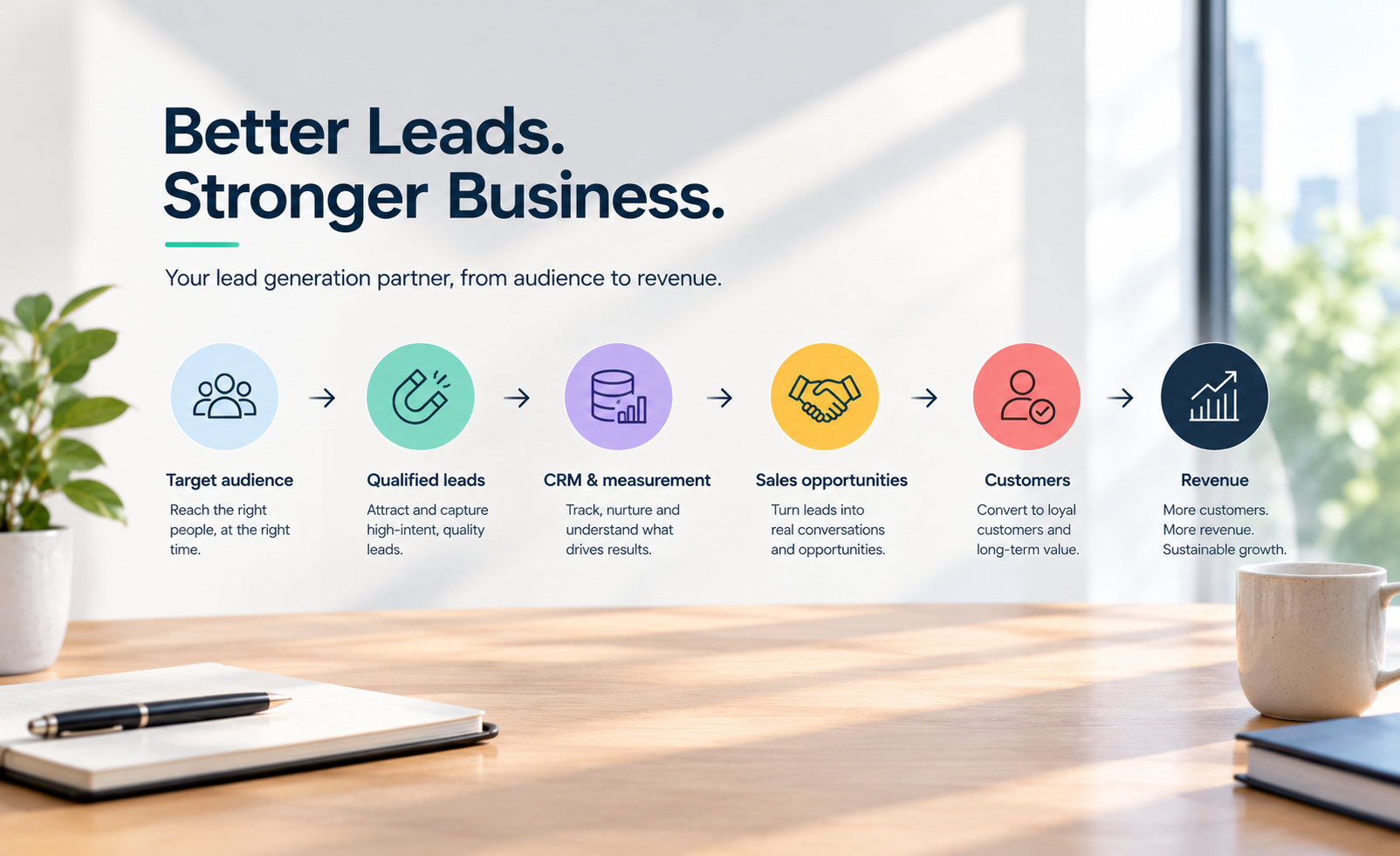
For eCommerce, compare CAC with contribution margin after product costs, fulfilment, payment fees, returns and discounts. For lead-generation businesses, follow the chain from click to lead, qualified lead, opportunity, customer and retained revenue. The relevant question is not whether a platform generated leads. It is whether it generated customers worth acquiring.
Set a payback threshold before you optimise
A $300 CAC may be outstanding for a business where a customer contributes $1,200 in gross profit over 12 months. It may be unsustainable for a retailer making $80 contribution margin on a first order with weak repeat purchases.
Set a maximum CAC and payback window based on cash flow, gross margin and customer lifetime value. This gives teams a commercial guardrail. It also prevents an all-too-common mistake: pausing a high-CAC channel that is genuinely profitable, while scaling a low-CAC channel that attracts discount-driven customers.
How to reduce customer acquisition cost at the conversion point
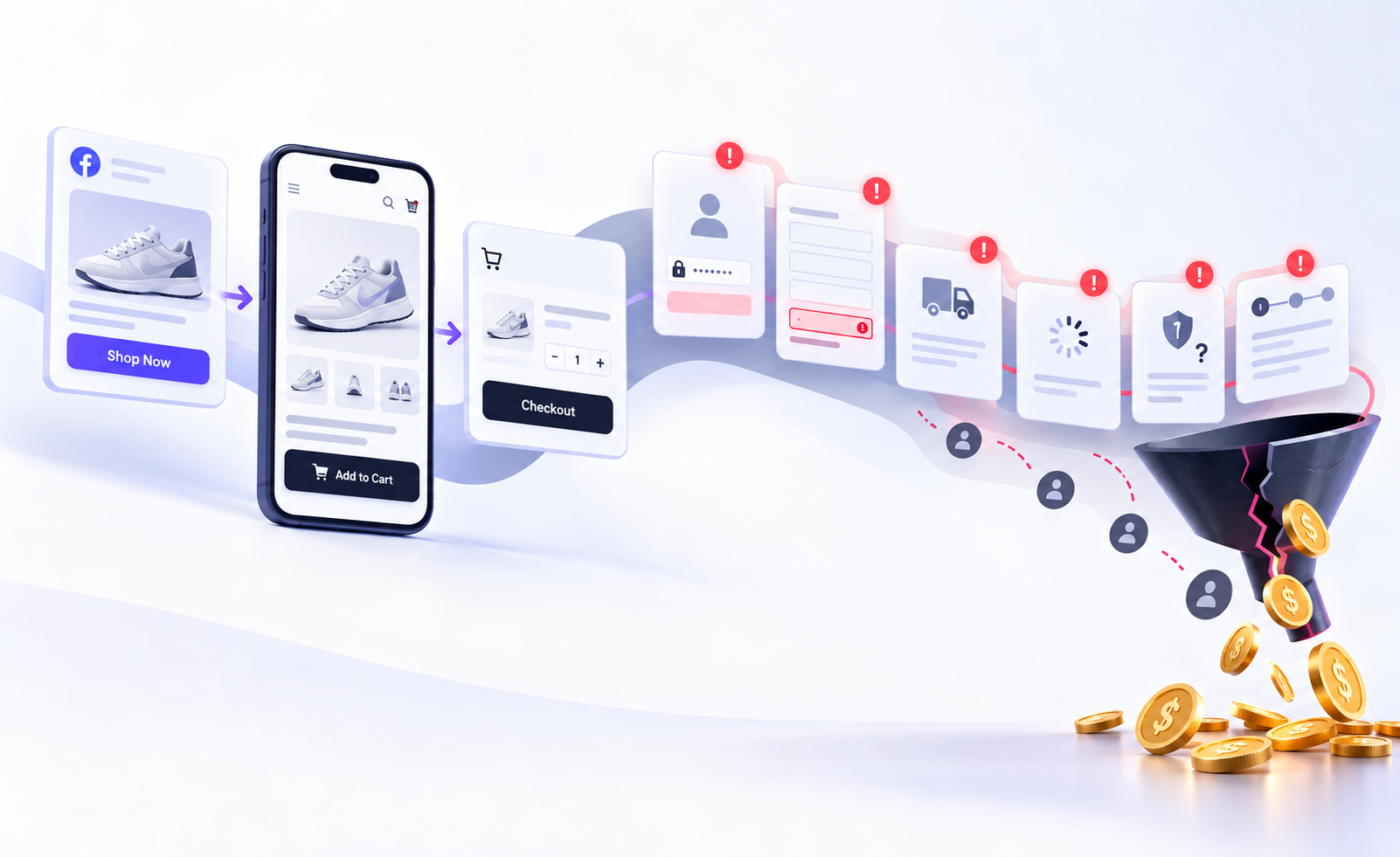
Most businesses look for a media fix first. Often, the more immediate opportunity sits after the click. If a landing page converts at 2% and you lift it to 2.5%, CAC falls by 20% before negotiating a single lower cost per click.
Start with the pages and funnels receiving meaningful paid traffic. Diagnose friction with analytics, session recordings, user testing and sales-call feedback. Look for mismatched messages between ad and landing page, weak proof, unclear pricing, slow mobile performance, unnecessary form fields and checkout surprises.
A conversion programme should prioritise high-impact hypotheses rather than cosmetic redesigns. Test a clearer value proposition, stronger offer architecture, delivery or returns information, customer proof, product comparison tools or a shorter enquiry flow. For B2B, qualify only the information sales genuinely needs at the first interaction. A long form may improve lead quality in some cases, but it can also suppress demand from legitimate buyers.
The trade-off is quality. Removing every friction point can increase lead volume while lowering intent. Track conversion to revenue, not just form completion.
Improve the economics of the first purchase
CAC improves when each acquired customer produces more margin. That may mean raising average order value through bundles, thresholds for free delivery, relevant upsells or better merchandising. It can also mean reducing reliance on blanket discounts that train buyers to wait for a promotion.
For service businesses, improve the speed and quality of lead follow-up. Harvard Business Review has previously reported that businesses responding to online leads within an hour were substantially more likely to qualify them than those waiting longer. The exact uplift will vary, but the operational principle holds: paid demand loses value quickly when response times are poor.
Put spend where intent and incrementality are strongest
Not all conversions credited to a channel were caused by that channel. This is particularly relevant for branded search, retargeting and bottom-funnel remarketing, where a customer may already have decided to buy.
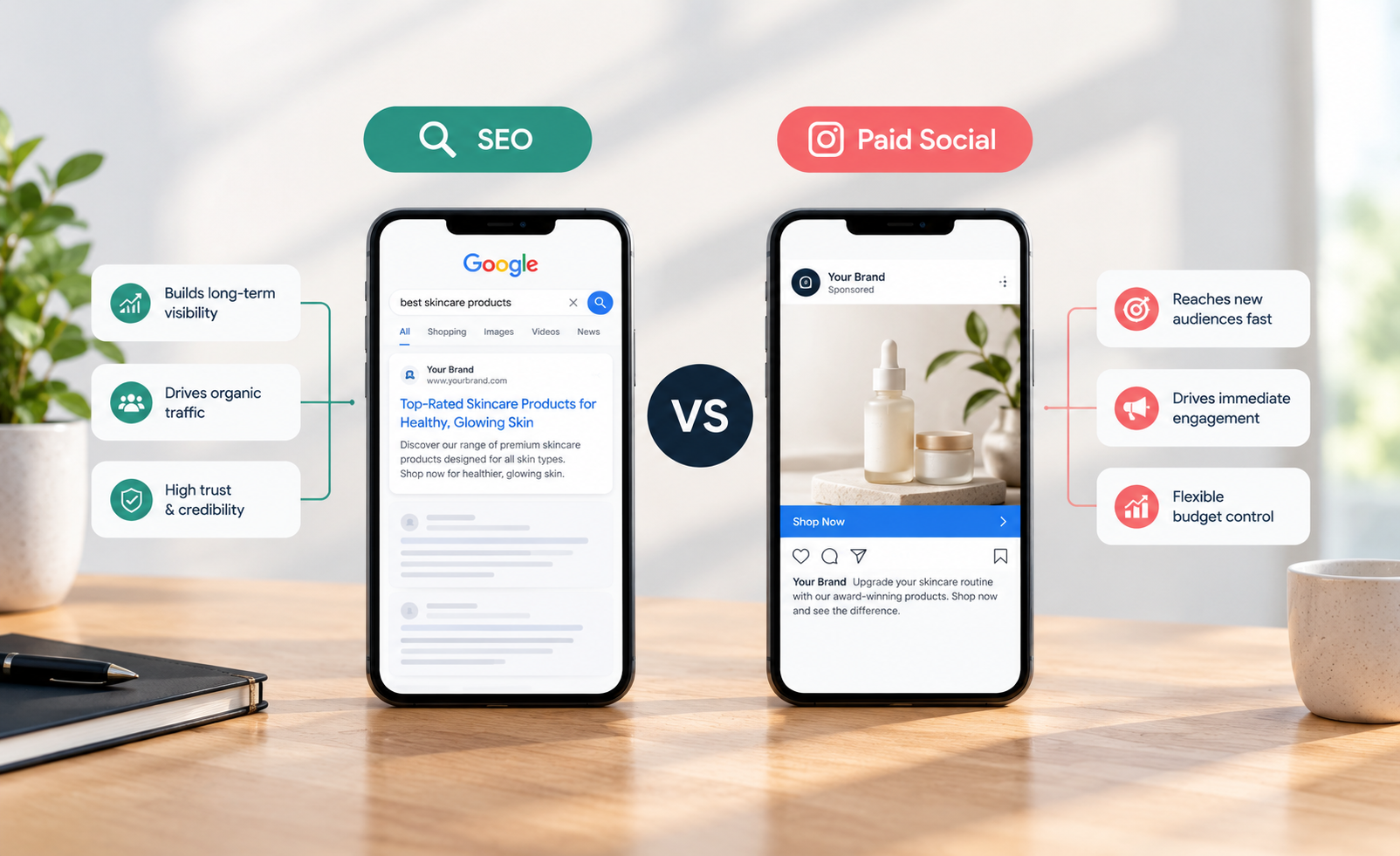
Separate demand capture from demand creation. Search campaigns for high-intent non-branded terms can capture active buyers. Paid social, video and creator activity may create future demand, but require a longer measurement window. Both can be valuable. They should not be judged by the same seven-day, last-click rule.
A practical budget review considers three questions: Is the audience incremental? Is the customer commercially valuable? Can this channel scale without a sharp deterioration in CAC?
Use geographic holdouts, audience exclusions, creative tests and controlled budget changes where feasible. If reducing retargeting spend barely changes total sales, the campaign may have been harvesting demand rather than creating it. Redirecting that budget into stronger prospecting, content or conversion optimisation can improve the overall system.
Build better inputs with first-party data
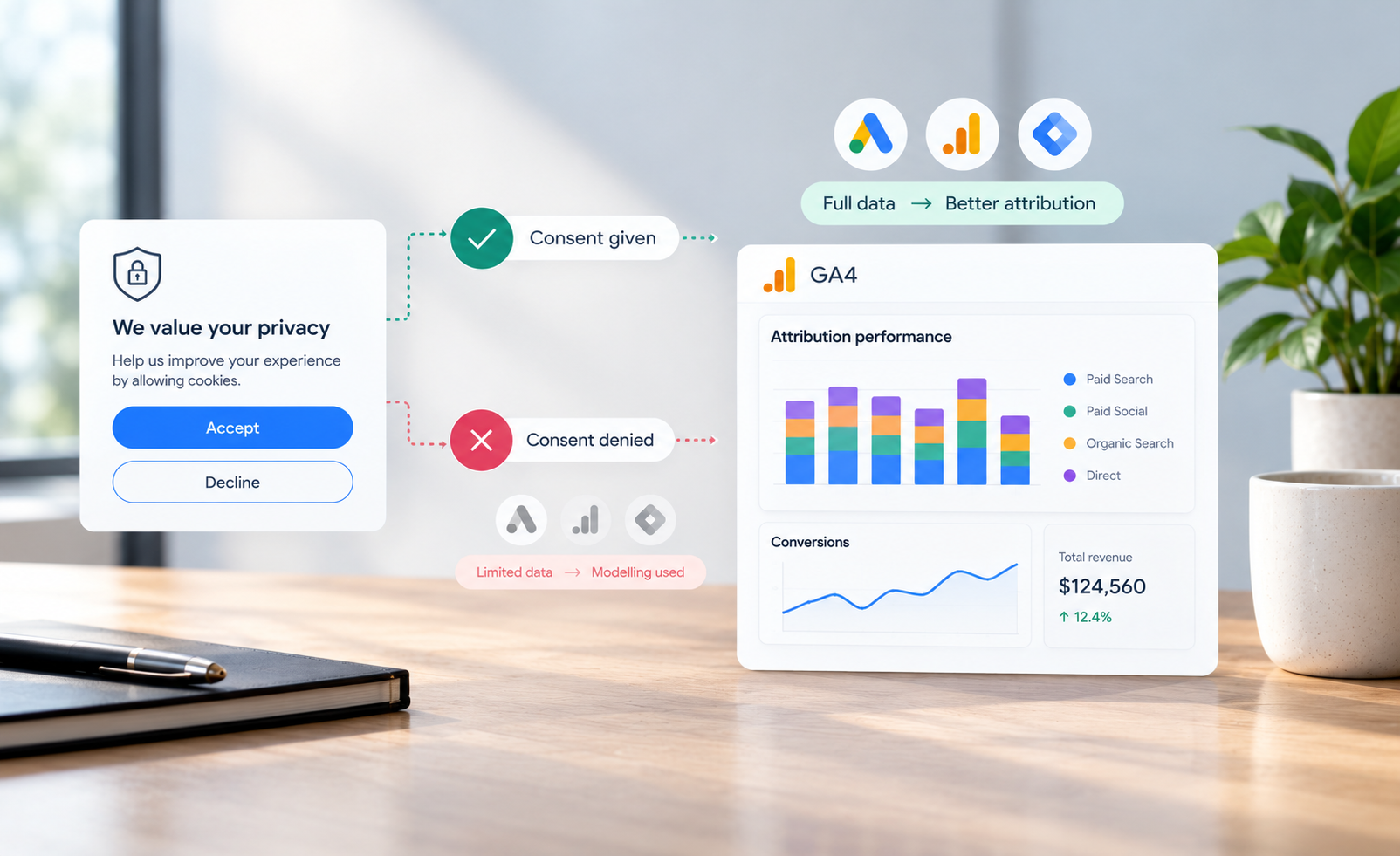
As signal loss makes platform targeting less precise, businesses with clean customer data have an advantage. First-party data includes purchase history, CRM stages, email engagement, product preferences and customer service interactions collected with appropriate consent.
Use it to build exclusions, suppression lists, customer segments and value-based audiences. Excluding recent purchasers from acquisition campaigns is simple, but frequently missed. So is separating high-value repeat customers from one-off bargain hunters when building lookalike audiences.
The quality of the data matters more than the size of the list. A small group of customers with strong repeat purchase, low return rates and healthy margin can be a better seed audience than a large database of mixed-quality buyers.
Make creative do more of the targeting work
Creative is no longer merely a production task. It is a targeting mechanism. A clear ad that names the use case, price point, location or customer problem filters out poor-fit clicks before they cost the business more.
Build a structured creative testing plan across hooks, proof points, formats and offers. For example, an Australian skincare brand might test education-led creative for problem-aware shoppers against routine-led bundles for existing category buyers. The winner should be evaluated on new-customer CAC and subsequent repurchase, not only thumb-stop rate or click-through rate.
Retention is an acquisition strategy
The most durable answer to rising CAC is to need fewer new customers to maintain growth. Better retention increases lifetime value, improves cash generation and makes more acquisition channels viable.
Focus on the first 30 to 90 days after purchase or sign-up. This is where onboarding, delivery experience, product education, service recovery and replenishment reminders shape whether a new customer becomes a repeat customer. For subscription and SaaS businesses, activation is especially important. A customer who never reaches the product’s core value is not a low-CAC win.
Referral programmes can also lower acquisition costs, but only when the underlying experience is referral-worthy. Incentives alone can produce low-quality sign-ups. Test referral performance against paid cohorts for activation, retention and margin before calling it a growth lever.
Run a weekly CAC operating rhythm
CAC reduction is not a one-off campaign clean-up. It is an operating discipline across marketing, sales, finance and customer experience. Review acquisition performance weekly, but make changes based on enough data to avoid reacting to normal volatility.
A useful review looks at spend, new customers, CAC, conversion rate, average order value, gross margin, payback and retention by channel or cohort. Then identify the constraint. If traffic quality is poor, fix targeting and creative. If quality is strong but conversion is poor, fix the landing experience. If first purchases work but payback is slow, improve margin and retention.
Do not cut spend simply because CAC has risen. In competitive categories, higher acquisition costs may reflect a channel that is reaching a more valuable customer or supporting a larger share of future demand. Cut waste decisively, but protect investment that is built to move revenue profitably.
The businesses that win on CAC are not constantly hunting for a cheaper platform. They build sharper measurement, stronger offers and customer experiences that make every marketing dollar work harder.