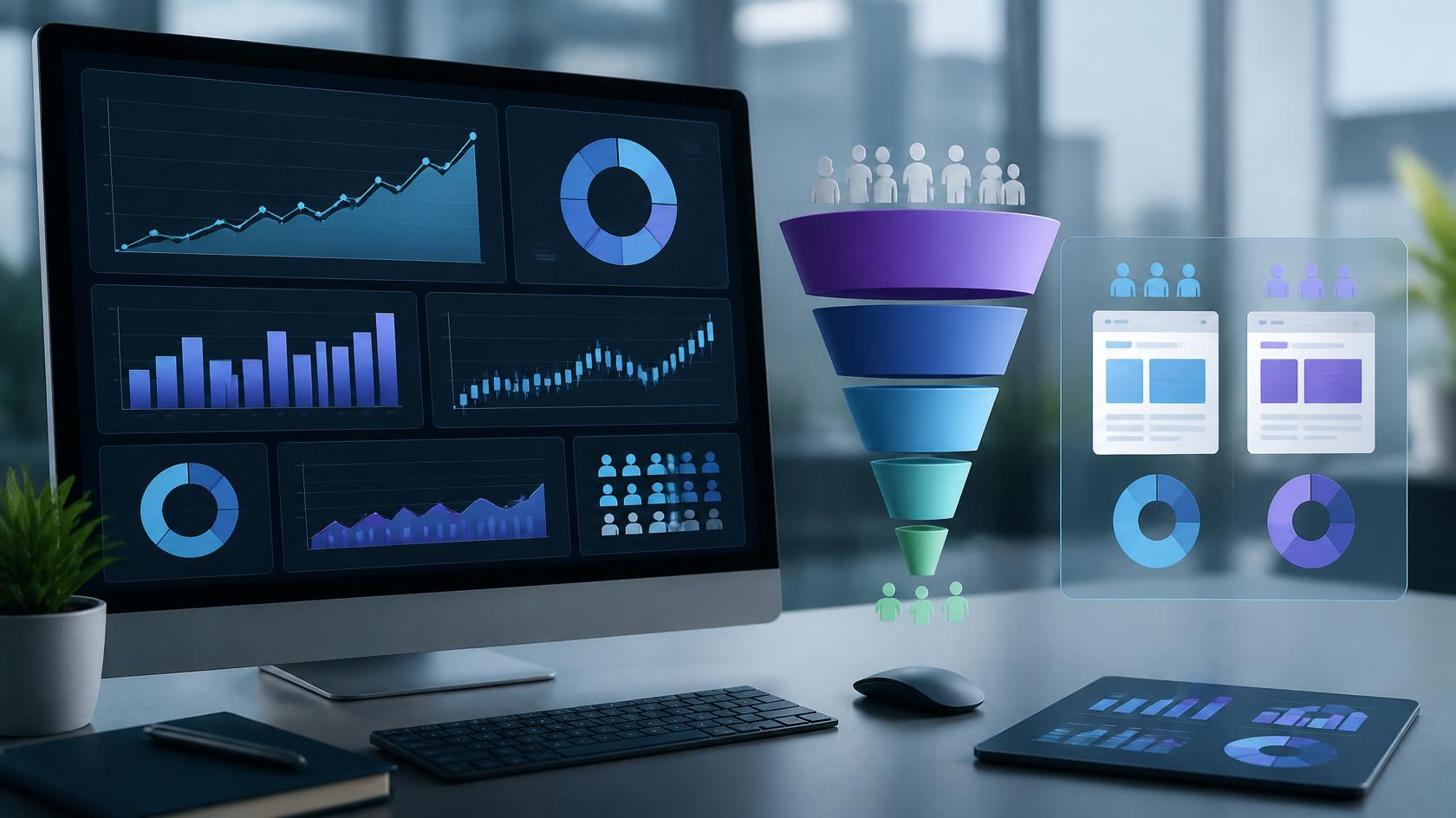

A paid media campaign can be generating qualified traffic, your SEO can be lifting visibility, and your brand can be getting noticed – yet revenue still stalls at the point of action. That is the commercial problem a conversion rate optimisation agency is built to solve. It turns existing demand into more enquiries, purchases and pipeline by finding where customers hesitate, leave or lose confidence.
For Australian businesses, conversion rate optimisation is not a cosmetic website exercise. It is a growth lever. Improving the performance of a high-intent landing page by even a small margin can change the economics of every Google Ads campaign, organic search investment and social media spend behind it.
Conversion rate optimisation is revenue work
Conversion rate optimisation, or CRO, is the disciplined process of improving the percentage of visitors who complete a valuable action. That action depends on the business model. For an eCommerce brand, it may be a sale, add-to-cart rate or average order value. For a service business, it may be a qualified enquiry, a booked consultation or a phone call from the right customer.
The key word is valuable. A higher form-completion rate means little if the leads are poor quality. A checkout change is not a win if it lifts sales but cuts margin through discount dependency. Strong CRO measures what happens beyond the button click and connects page performance to commercial outcomes.
This is where many businesses lose momentum. They send more traffic to a site that was designed around internal assumptions rather than real customer behaviour. The marketing team then responds by increasing budget, changing audiences or chasing the next channel. Meanwhile, the conversion barrier remains untouched.
A strategy-first CRO program changes the question from: How do we get more visitors? to What is stopping the right visitors from becoming customers?
What a conversion rate optimisation agency actually does
A capable conversion rate optimisation agency combines analysis, customer insight, UX thinking, copy, design and technical delivery. It does not make random changes and wait for a metric to move. It builds a case for each change, tests it where appropriate, and measures the business impact.
The work usually begins with a conversion audit. This examines the full path from ad or search result through to the final action. It considers traffic sources, device split, page speed, navigation, landing page relevance, messaging hierarchy, form friction, checkout flow and tracking quality.
The audit should also examine the mismatch between expectation and experience. If an ad promises next-day delivery, an offer-led price or specialist expertise, the landing page needs to confirm that promise immediately. When it does not, visitors have no reason to keep moving.
Finding the real points of friction
Analytics can show where visitors drop off. Behavioural tools, session recordings, heatmaps and form analytics can indicate why. Customer research adds another layer by revealing the questions, objections and language people use before buying.
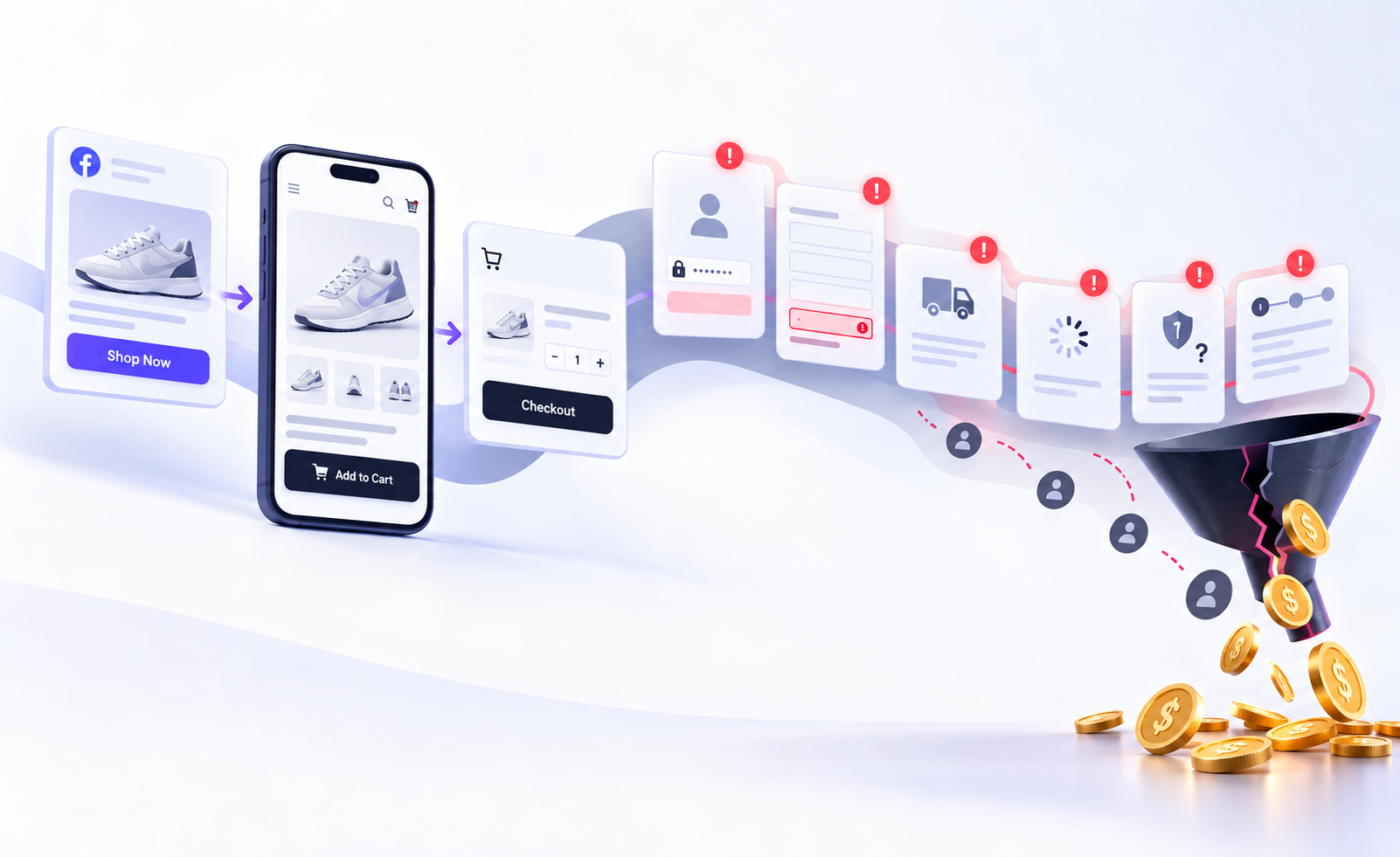
A pattern may emerge: mobile users are abandoning at payment because the checkout is slow; prospects are leaving a lead form because it asks for too much too early; or buyers are comparing products because the category page does not make the differences clear. These are not design preferences. They are revenue leaks.
Good CRO separates signal from noise. A small sample size, a short-term traffic spike or a tracking error can create a misleading story. That is why decisions should be grounded in data quality, context and the value of the conversion being measured.
Building hypotheses, not redesign wish lists
Once the friction points are clear, the agency creates prioritised hypotheses. A useful hypothesis is specific: reducing form fields from eight to four may increase qualified enquiries because the first interaction asks less of a time-poor prospect. It sets out the expected behaviour change, the reason behind it and the metric that will prove or disprove it.
Prioritisation matters. Not every opportunity deserves the same effort. High-traffic pages, high-intent landing pages and revenue-critical checkout steps generally come first. A beautifully redesigned low-traffic page may have little commercial upside, while a clearer value proposition on a paid search landing page could materially improve return on ad spend.
Some improvements should be tested through controlled experiments. Others, such as fixing broken tracking, improving load speed or removing an obvious mobile usability issue, should simply be implemented. The right approach depends on traffic volume, risk, development complexity and the cost of waiting for statistical certainty.
The conversion levers that matter most
There is no universal winning page layout. What works for a high-consideration B2B service will not necessarily work for an impulse-purchase retailer. Still, the strongest CRO programs repeatedly focus on a few commercial fundamentals.
First is message clarity. A visitor should quickly understand what you offer, who it is for and why it is a better choice. Vague claims create work for the customer. Specific benefits, credible proof and a clear next step reduce it.
Second is trust. Australian buyers are alert to risk, particularly when a purchase is expensive, unfamiliar or tied to personal data. Reviews, case studies, guarantees, certifications, clear delivery information, transparent pricing and recognisable payment options can all reduce uncertainty. The proof needs to appear where the doubt occurs, not be buried on an About page.
Third is friction. Forms, checkouts and booking flows should ask only for what is necessary at that stage. Mobile users need buttons they can tap, pages that load quickly and paths that do not require unnecessary backtracking. Reducing friction does not mean removing every detail. For a complex service, a qualifying question may improve sales efficiency. The decision comes down to whether the information creates useful intent or needless resistance.
Finally, CRO considers momentum. A customer rarely moves from first visit to purchase in a straight line. For high-consideration products and services, the right conversion may be a quote request, downloadable guide, callback or booked meeting. Each step should create a logical reason to continue rather than force a decision before the buyer is ready.
Why CRO performs best as part of the growth system
CRO is often treated as a standalone website project. That limits its value. The better model connects conversion insight with media, SEO, creative, content and development.
Paid media data can reveal which offers and messages bring high-value traffic. Search data can expose the commercial intent behind customer queries. Sales teams can identify objections that never show up in analytics. CRO then turns those insights into clearer landing pages, stronger campaigns and more useful customer journeys.
This integrated approach also prevents a common mistake: optimising for the wrong metric. If an agency is measured only on a page-level conversion rate, it may steer visitors towards easier but lower-value actions. If it is measured on qualified leads, revenue, margin and customer value, the optimisation work aligns with how the business actually grows.
At Loud Days, CRO is approached as part of the performance engine, not a design afterthought. The goal is to make every channel work harder by creating a more credible, more direct path from attention to action.
How to assess a CRO partner
The right agency should be able to explain its process without hiding behind jargon. Ask how it audits a customer journey, validates tracking, prioritises opportunities and decides whether a change needs an A/B test. Ask what commercial metrics it reports on and how it handles a test that does not produce a positive result.
A negative or inconclusive result is not wasted effort when it produces a clear learning. It prevents a business from scaling an assumption and sharpens the next decision. Be cautious of any provider that guarantees a conversion lift before it understands your traffic, offer, technology and audience.
You should also assess execution capability. Insight without implementation slows progress. CRO recommendations often require copy changes, creative assets, design updates, development support and accurate analytics. A partner that can move from diagnosis to delivery will usually create more momentum than one that leaves a long backlog for internal teams.
The best conversion work does not make a website feel louder. It makes the decision easier for the right customer. Start with the pages where intent and commercial value are highest, measure the full outcome, and keep improving the path until your traffic has a stronger reason to become revenue.
Frequently asked questions
Is hiring a conversion rate optimisation agency worth it?
It depends on your traffic and your growth goals. Businesses already investing in SEO, Google Ads or other acquisition channels often see a stronger return when they improve conversion rate before increasing advertising spend. Even small improvements on high-intent landing pages can compound across every marketing channel.
How long does CRO take to show results?
Some improvements, such as fixing broken forms or improving page speed, can have an immediate effect. Structured testing usually takes longer because enough traffic is needed to measure meaningful changes with confidence.
Can a small business benefit from CRO?
Yes. CRO isn’t only for large eCommerce brands. Service businesses, SaaS companies and local businesses can all improve enquiry rates by reducing friction, strengthening trust signals and making it easier for visitors to take the next step.
Does CRO improve SEO?
Not directly. Google doesn’t rank websites higher simply because they convert well. Better user experience, faster pages and clearer content can support SEO performance over time, while CRO helps more of the visitors you already attract become customers.