


Key takeaways
- A digital growth strategy consultant is most valuable when growth has stalled, acquisition costs are rising, or marketing activity lacks a clear commercial priority.
- The best consultants diagnose the full growth system – demand, conversion, retention, measurement and margin – rather than prescribing more spend on a single channel.
- A strategy is only useful when it produces decisions: what to stop, what to fund, what to test and how success will be measured.
A digital growth strategy consultant is not there to make a marketing plan look more polished. Their job is to find the commercial constraints preventing a business from growing efficiently, then build a practical route around them.
That distinction matters. Many Australian businesses already run Google Ads, paid social, email, SEO and a CRM. The issue is rarely a complete absence of activity. More often, channels are operating independently, reporting is inconsistent, and nobody can confidently explain which investment is producing profitable customer growth.
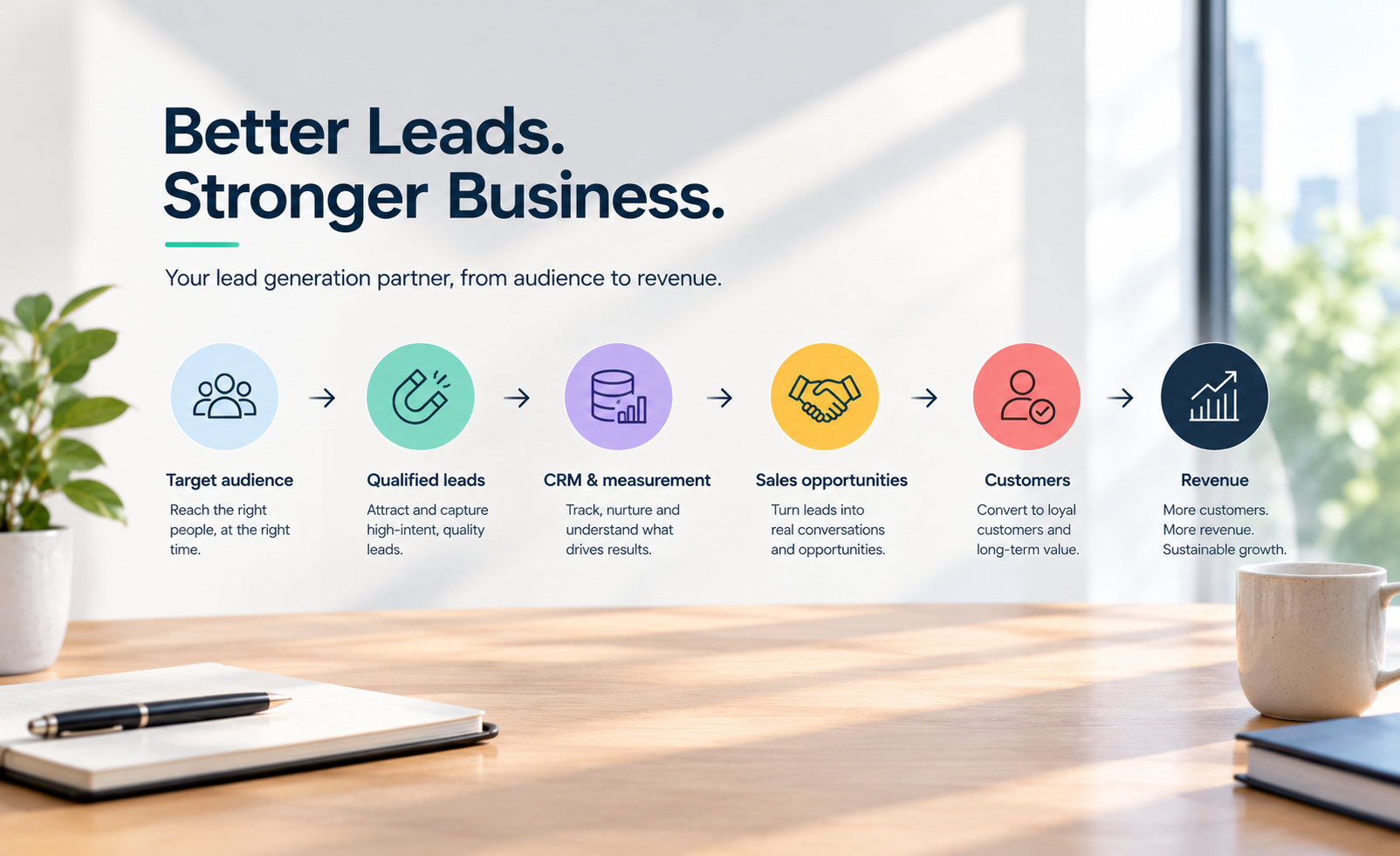
A consultant should bring order to that complexity. They should connect customer behaviour, channel performance, website conversion, unit economics and measurement into one strategy built to move revenue.
What a digital growth strategy consultant actually does
At its best, growth consulting sits between executive decision-making and channel execution. It answers the questions that sit above campaign management: Where is the next profitable customer likely to come from? What is limiting conversion? Can the business afford to acquire that customer? Which experiments deserve priority?
The work usually begins with diagnosis. This means reviewing market demand, customer segments, search behaviour, paid media accounts, website journeys, CRM data, analytics configuration and sales outcomes. For an eCommerce brand, the emphasis may be product margins, repeat purchase rates and merchandising. For a B2B business, it may be lead quality, sales-cycle length and the conversion rate from marketing-qualified lead to opportunity.
The output should be a prioritised growth plan, not a generic channel checklist. It should specify the opportunity, expected impact, implementation effort, owner, measurement method and decision deadline for each initiative.
Strategy is different from channel advice
A paid media specialist may improve account structure and bidding. An SEO practitioner may identify technical issues and content opportunities. Both can be highly valuable, but a growth strategist decides where those efforts sit in the broader commercial model.
For example, a retailer seeing weak return on ad spend may assume the answer is cheaper traffic. A proper diagnosis may show that the real issue is low mobile conversion, stock-outs in advertised product lines, or an acquisition mix skewed towards one-time discount buyers. More media spend would amplify the problem.
This is why strategy-first work can feel less immediately visible than launching campaigns. It often starts by challenging assumptions, fixing measurement and narrowing focus. That restraint protects budget.
When hiring a consultant makes commercial sense
Consulting is not automatically the right answer for every business. A new business with limited demand and no proven offer may benefit more from direct customer research and a small number of controlled acquisition tests. A mature organisation with a capable in-house strategy team may need specialist execution rather than external direction.
It becomes valuable when the cost of unclear decisions exceeds the cost of expert diagnosis. Common signals include rising customer acquisition cost, flat conversion rates despite increasing traffic, conflicting channel reports, a major launch, a new market entry or a change in the economics of a core product.
The need is particularly acute when businesses scale spend faster than their measurement capability. Gartner’s 2024 CMO Spend Survey found marketing budgets averaged 7.7% of company revenue, while nearly 60% of CMOs reported insufficient budget to execute their strategy. The commercial implication is straightforward: waste is harder to absorb, so allocation decisions matter more.
| Business situation | Likely underlying issue | Strategic priority |
|---|---|---|
| Traffic is growing but revenue is flat | Poor conversion, weak offer or low-intent acquisition | Audit journeys, landing pages and channel intent |
| Revenue is growing but profit is not | Margin-blind media spend or discount dependency | Set contribution-margin targets and acquisition guardrails |
| Leads are plentiful but sales are weak | Lead quality, follow-up or qualification mismatch | Connect campaign, CRM and sales data |
| Teams disagree on performance | Fragmented attribution and inconsistent definitions | Establish a shared measurement model |
| Growth depends on one channel | Concentration risk and limited learning | Build a diversified testing roadmap |
The five-part growth diagnosis
A useful digital growth strategy has to account for the whole customer system. Loud Days commonly frames this work around five connected areas.
1. Demand and audience
Start with the size and quality of available demand. What are customers searching for? Which problems trigger action? What alternatives do they compare? Search data, customer interviews, CRM records and on-site search behaviour can reveal the language people use before they buy.
The goal is not simply to find a larger audience. It is to identify segments with enough intent, fit and lifetime value to justify investment.
2. Acquisition efficiency
Acquisition analysis goes beyond cost per click or cost per lead. It looks at the cost of acquiring a customer, qualified lead or opportunity, depending on the business model. It also examines incrementality: whether marketing activity created additional demand or merely claimed credit for customers who would have converted anyway.
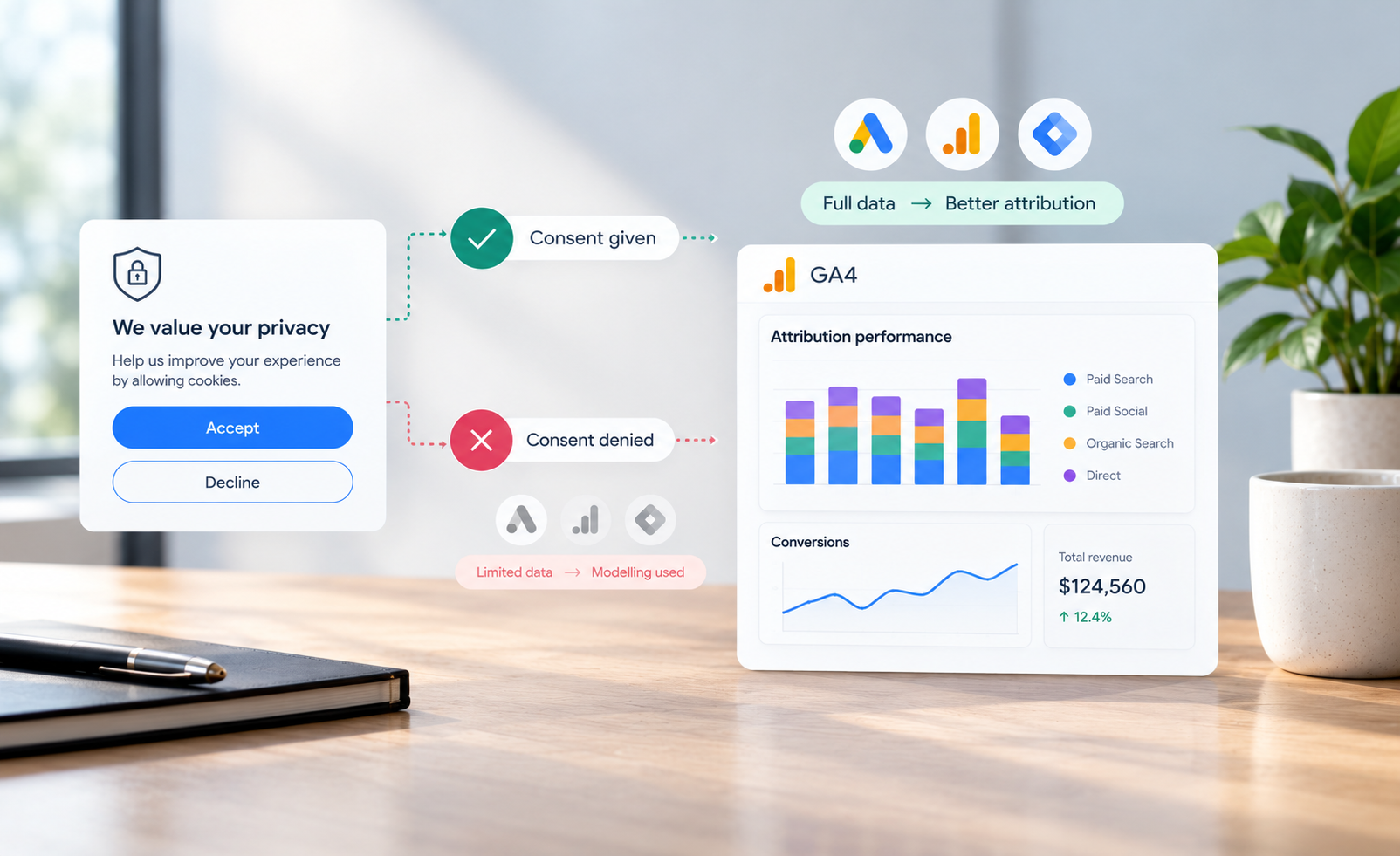
Platform-reported attribution is useful for optimisation, but it should not be treated as the business’s source of truth. Different platforms can each claim the same sale. A consultant should reconcile platform data with analytics, CRM outcomes and finance data where possible.
3. Conversion and customer experience
A site can have a media problem, a conversion problem or both. The distinction is critical. Review conversion by device, landing page, traffic source, new versus returning customer, product category and stage of the funnel.
Look for friction with commercial consequences: slow mobile pages, vague value propositions, unexpected delivery costs, weak proof, long forms and checkout failures. The most valuable conversion changes are usually specific and testable, not broad redesign projects.
4. Retention and customer value
Customer acquisition becomes more viable when retention improves. Repeat purchase rate, time to second order, cohort revenue, churn, refund rate and average order value should influence acquisition decisions.
A brand with strong repeat behaviour may sustainably pay more to win a first customer. A low-repeat category may need much tighter payback targets. This is where generic return on ad spend targets fail. The right threshold depends on gross margin, fulfilment costs, customer lifetime value and cash flow.
5. Measurement and operating rhythm
No strategy survives vague reporting. Establish a small set of shared definitions for revenue, new customers, qualified leads, conversion rate, customer acquisition cost, contribution margin and payback period. Then determine who reviews them, how often, and what action follows a material change.
A monthly dashboard without decisions is reporting theatre. A useful operating rhythm pairs performance reviews with a live experiment backlog and clear accountability.
What to expect from a strong engagement
The strongest consulting engagements create capability, not dependency. You should expect a clear baseline, a documented growth model, an opportunity backlog and a practical roadmap that your internal team or agency partners can execute.
The roadmap should distinguish between quick wins and structural work. Fixing broken tracking or improving a high-traffic product page may produce an early result. Repositioning an offer, rebuilding lifecycle marketing or improving data architecture takes longer but can change the growth ceiling.
Be cautious of consultants who promise a revenue number before understanding the data, margins and market. Growth is affected by factors beyond marketing: inventory, pricing, sales capacity, product quality and seasonality all matter. A credible adviser will define assumptions, identify risks and explain what would change their recommendation.
Questions to ask before appointing one
Ask how they diagnose a problem before asking which channels they run. Their answer should reveal whether they think in systems or services.
You should also ask what data they need, how they handle incomplete attribution, how they prioritise experiments, and how success will be measured against profit rather than vanity metrics. Request examples of decisions they have recommended against. Knowing when not to spend is a mark of commercial discipline.
Finally, clarify ownership. A consultant can set direction, but execution still needs accountable people, realistic timelines and access to data. Strategy fails when it is delivered as a slide deck with no operating plan behind it.
A practical test for your current strategy
If your leadership team cannot answer these four questions with the same numbers, there is a strategy gap: Which customer segment is most profitable to acquire? Which channels create incremental revenue? Where does the customer journey lose the most value? What is the next experiment with the highest expected commercial impact?
The answer is not always to hire a consultant. Sometimes the next move is to clean up analytics, speak to customers or give an existing team clearer decision rights. But when growth decisions have become expensive, fragmented or politically contested, independent strategic rigour can create outsized value.
The right growth strategy does not promise certainty. It gives the business a disciplined way to make better bets, learn faster and direct every available marketing dollar towards measurable success.