
Key takeaways
- Conversion rate optimisation (CRO) is the disciplined process of improving the percentage of visitors who take a valuable action.
- Good CRO improves revenue efficiency, not just a single on-site metric. A higher conversion rate is only useful if lead quality, margin and customer value hold up.
- The strongest programmes begin with evidence: analytics, customer research, technical checks and a clear commercial hypothesis.
- Small improvements compound. Lifting a site converting at 2% to 2.5% produces 25% more conversions from the same traffic volume.
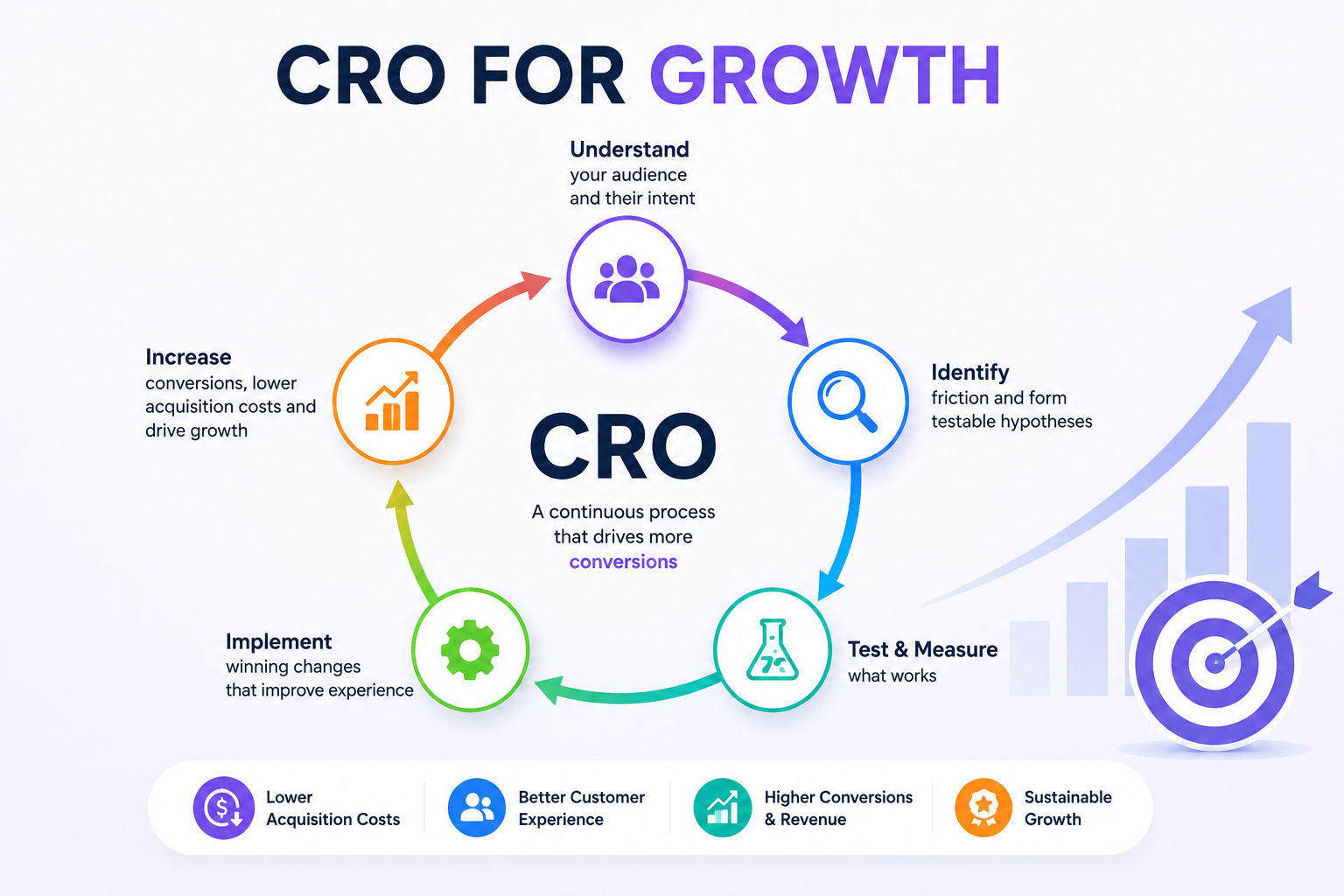
A paid media campaign can be well targeted, a search strategy can be technically sound, and a brand can still lose demand at the moment of decision. What is conversion rate optimisation? It is the method of finding and removing the friction that stops a visitor from becoming a customer, lead, subscriber or qualified enquiry.
For Australian businesses facing rising media costs, CRO is not a cosmetic exercise. It is a revenue-efficiency discipline built to move more value from the traffic you already own and pay for. The work sits at the intersection of analytics, user experience, consumer psychology, copy, design and commercial strategy.
What is conversion rate optimisation?
Conversion rate optimisation is the ongoing practice of increasing the proportion of website users who complete a desired action. That action depends on the business model. For an eCommerce retailer, it may be a completed purchase. For a B2B firm, it could be a qualified form submission, booked consultation or phone call. For a publisher, it may be a subscription or account creation.
The core calculation is straightforward:
Conversion rate = conversions / total visitors x 100
If 200 people buy from 10,000 sessions, the purchase conversion rate is 2%. If improvements lift purchases to 250 with the same traffic, the rate becomes 2.5%.
CRO is often misunderstood as changing a button colour or making a page look more modern. Those changes can be part of a test, but they are not a strategy. Proper optimisation asks more commercially useful questions: Are we attracting the right audience? Do visitors understand the offer? Is the price or value proposition credible? Can they complete the journey without uncertainty, delay or technical failure?
Macro and micro conversions
A macro conversion is the primary commercial outcome, such as a sale, demo request or signed contract. Micro conversions are behaviours that signal progress, including viewing product details, using a sizing guide, adding to cart, downloading a capability statement or starting a form.
Micro conversions help diagnose where a journey is breaking. A product page with strong add-to-cart activity but weak checkout completion has a different problem from one where visitors leave before engaging with the product details. Neither issue is solved by blindly redesigning the entire site.
Why CRO matters when acquisition costs rise
Traffic acquisition has a cost, whether it comes from Google Ads, SEO investment, social media, partnerships or an internal sales team. When conversion performance is weak, every acquisition channel becomes less efficient.
Consider an eCommerce business spending $20,000 per month to bring 20,000 sessions to its site. At a 2% conversion rate and $100 average order value, it generates 400 orders and $40,000 in revenue. Lift conversion to 2.4% without increasing traffic and revenue rises to $48,000. The gain is not theoretical: it changes the amount the business can afford to invest in customer acquisition while protecting margin.
| Metric | Before optimisation | After optimisation |
|---|---|---|
| Monthly sessions | 20,000 | 20,000 |
| Conversion rate | 2.0% | 2.4% |
| Orders | 400 | 480 |
| Average order value | $100 | $100 |
| Revenue | $40,000 | $48,000 |
The trade-off is that conversion rate alone can be misleading. Aggressive discounting, over-promising in ads, or simplifying a lead form so far that it attracts poor-fit enquiries may lift the headline number while reducing profit or sales-team productivity. CRO should therefore be judged against revenue, gross margin, qualified lead rate, customer lifetime value and refund rate where relevant.
Where conversion problems usually occur
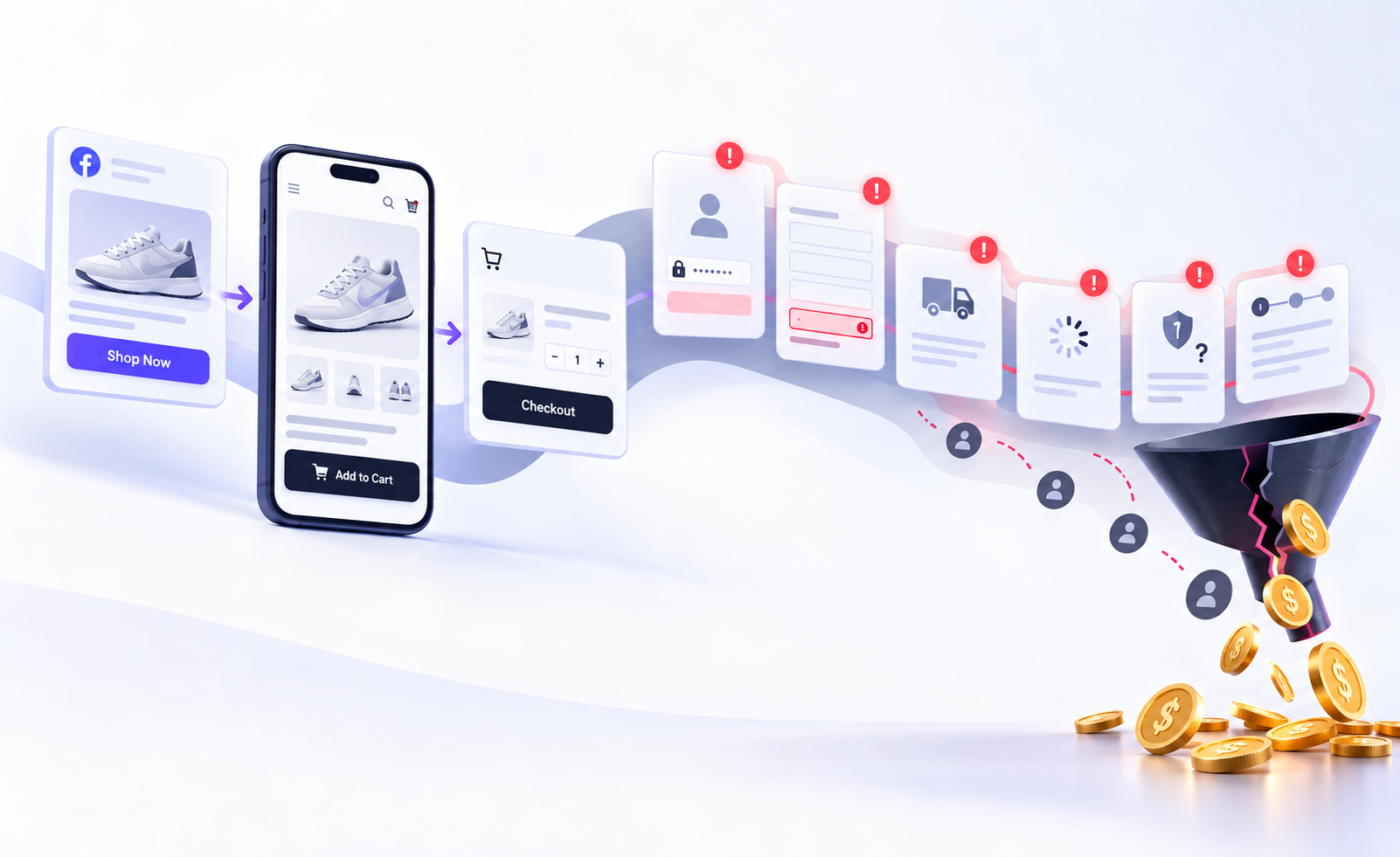
Most conversion losses are not caused by one dramatic flaw. They accumulate through unanswered questions and unnecessary effort. A visitor may hesitate because delivery costs appear late, product benefits are vague, page speed is poor on mobile, reviews are absent, payment options are limited, or the form asks for information before trust has been earned.
Cart and checkout abandonment remain a major eCommerce issue. Baymard Institute’s aggregated research has consistently placed average online cart abandonment at about 70%, although the number varies significantly by device, category, price point and purchase intent. That is not a benchmark to accept. It is a prompt to investigate the specific reasons customers leave your journey.
For lead generation, the equivalent friction often appears in the gap between an ad promise and a landing page. A user searching for a specific service should land on a page that addresses that need directly, provides evidence and makes the next step clear. Sending all paid traffic to a generic homepage asks the visitor to do the work your campaign should have done.
A practical CRO framework
CRO works best as a repeatable operating system, not a collection of opinions. Start by defining the conversion event and the commercial outcome that makes it worthwhile. Then build a baseline: current conversion rate, revenue per session, funnel drop-off, device performance, channel mix and new versus returning user behaviour.
1. Find the highest-value friction
Use quantitative data to identify where users leave, then use qualitative evidence to understand why. Analytics can reveal a checkout step with unusual exits or a form field that causes abandonment. Session recordings, heatmaps, on-site surveys, customer-service logs and sales-call notes can reveal the confusion behind the number.
Segment the analysis. Mobile users may struggle with a sticky overlay that desktop users never see. Paid social visitors may need more reassurance than branded-search visitors. Existing customers may convert quickly while first-time buyers need delivery detail, reviews and comparison information.
2. Form a testable hypothesis
A useful hypothesis states the audience, problem, proposed change and expected outcome.
For example: “For first-time mobile shoppers, making delivery timing and returns visible above the add-to-cart button will reduce purchase uncertainty and increase completed checkouts.”
This is stronger than saying, “Let’s improve the product page.” It gives the team a reason for the test and a clear measure of success.
3. Prioritise by impact, confidence and effort
Not every idea deserves immediate development. A simple prioritisation model prevents teams from spending weeks on a low-value visual preference.
| Factor | Question to ask |
|---|---|
| Impact | If this works, how much revenue or lead quality could it affect? |
| Confidence | What evidence supports the hypothesis? |
| Effort | What design, development, legal or operational work is required? |
Prioritise high-impact ideas supported by strong evidence that can be implemented without disproportionate effort. A checkout error fix may outperform an expensive homepage redesign because it resolves a direct barrier close to purchase.
4. Test, measure and decide
A/B testing compares a control version against a changed version with users split between the two. It is valuable when traffic volume is sufficient, and the change can be isolated. For lower-traffic B2B sites, testing every idea may take too long. In those cases, combine user research, funnel analysis, and carefully measured before-and-after releases.
Do not call a test early because results look promising after a few days. Account for sufficient sample size, sales cycles, weekday patterns, marketing campaigns and conversion lag. More importantly, examine guardrail metrics. A winning variation should not raise form completions while cutting lead quality in half.
The elements that most often improve conversion
The best opportunity depends on the business, but several areas repeatedly warrant scrutiny. Message match is first: the headline, offer and proof on the landing page should reflect the intent that brought the user there. Clarity beats cleverness when someone is evaluating price, risk and fit.
Trust is next. Customer reviews, case studies, clear contact options, return policies, payment security cues and transparent delivery information reduce perceived risk. These elements need to be specific and credible, not decorative badges scattered across a page.
Then comes usability. Mobile-first layouts, fast-loading pages, readable content, accessible forms and obvious calls to action reduce effort. Finally, offer design matters. Bundles, finance options, a well-timed incentive or a clearer comparison can improve perceived value, but discounting should not become the default solution to a weak proposition.
Common CRO mistakes that waste budget
The first mistake is treating an industry benchmark as a target. A 3% conversion rate could be excellent for high-consideration B2B services and poor for a low-cost repeat-purchase product. Compare performance within your own channel, device, product category and customer cohort before concluding.
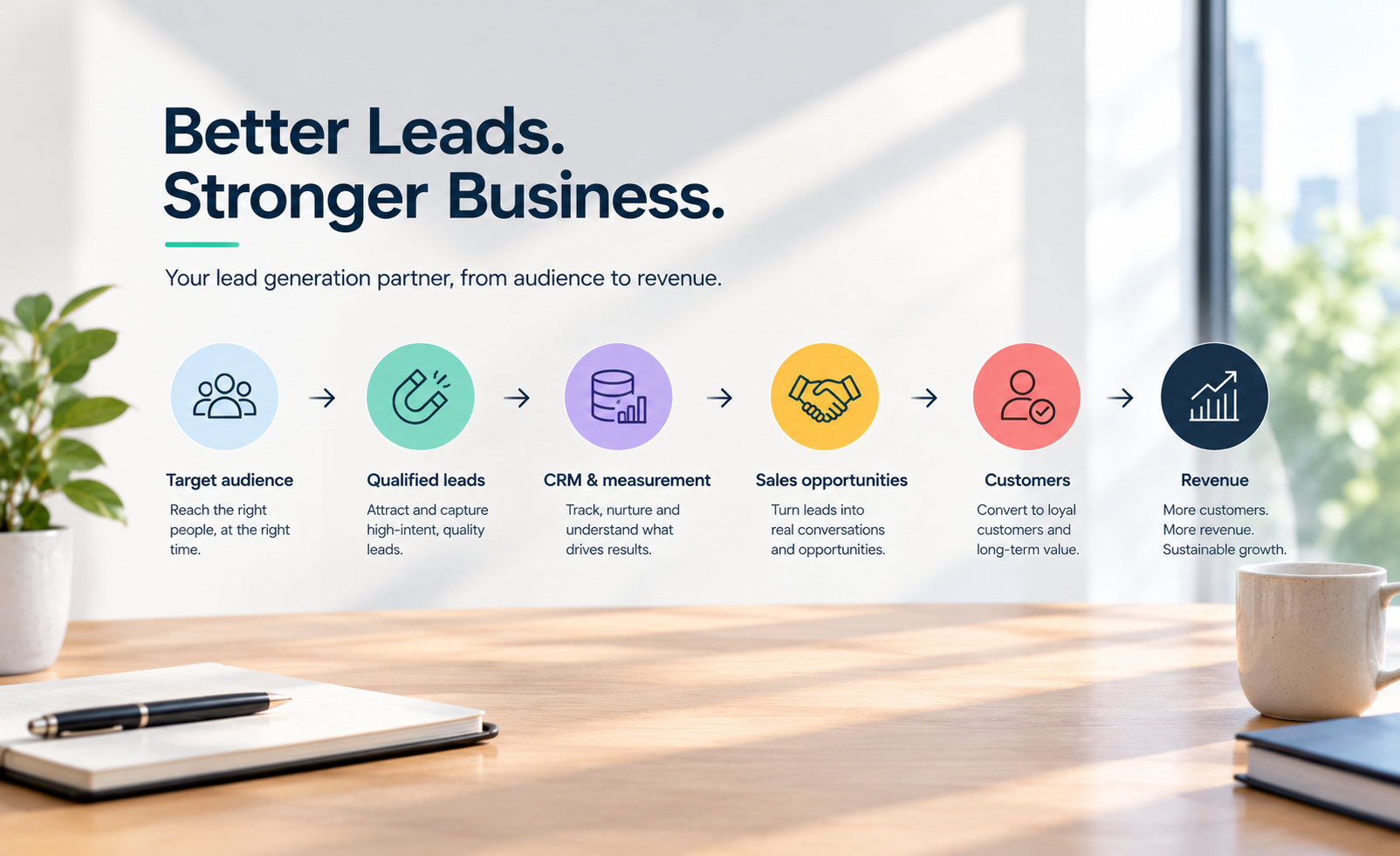
The second is testing without research. Random changes may occasionally win, but they create no reliable learning system. The third is measuring only the final conversion. A service business should track which sources produce booked meetings, sales opportunities and revenue, not merely form fills.
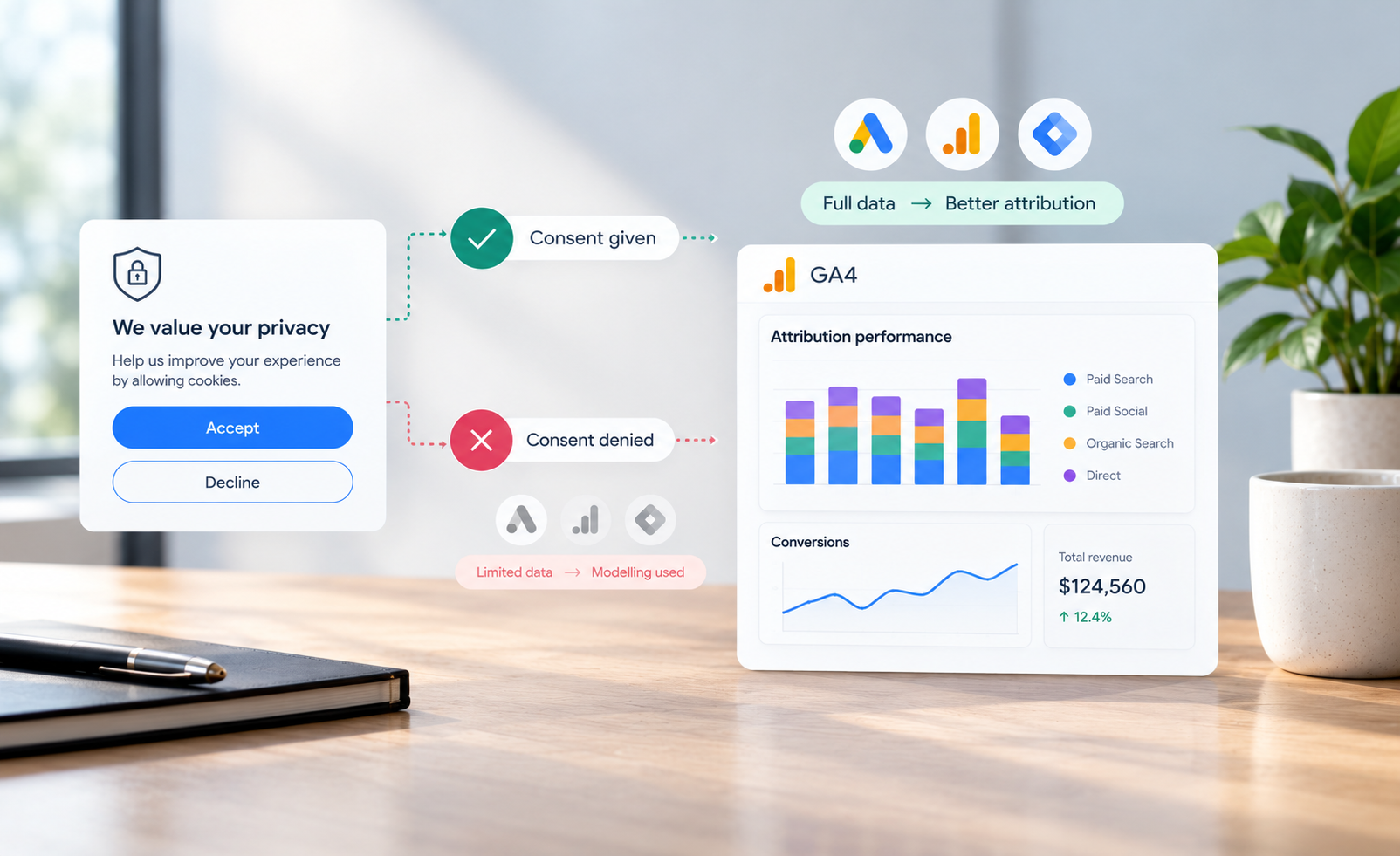
The fourth is overlooking technical quality. Broken tracking, slow templates, faulty promo codes, payment errors and consent-banner conflicts can distort results or prevent conversions entirely. Before testing persuasion, confirm that the site works.
Turning CRO into a growth system
The businesses that benefit most from CRO make it part of normal marketing operations. They review funnel performance regularly, retain a prioritised experiment backlog and feed customer feedback into landing pages, product content and campaign strategy. Each test creates knowledge that improves future acquisition as well as on-site performance.
Loud Days helps Australian brands build that system through strategy-first conversion analysis, measurement planning and experiments tied to revenue rather than vanity metrics. The objective is measurable success: understand where demand is leaking, fix the right problem, and make every marketing dollar work harder.
A better conversion rate is rarely the result of one clever tactic. It comes from treating every customer decision as evidence, then using that evidence to make the next step easier, clearer and more valuable.