
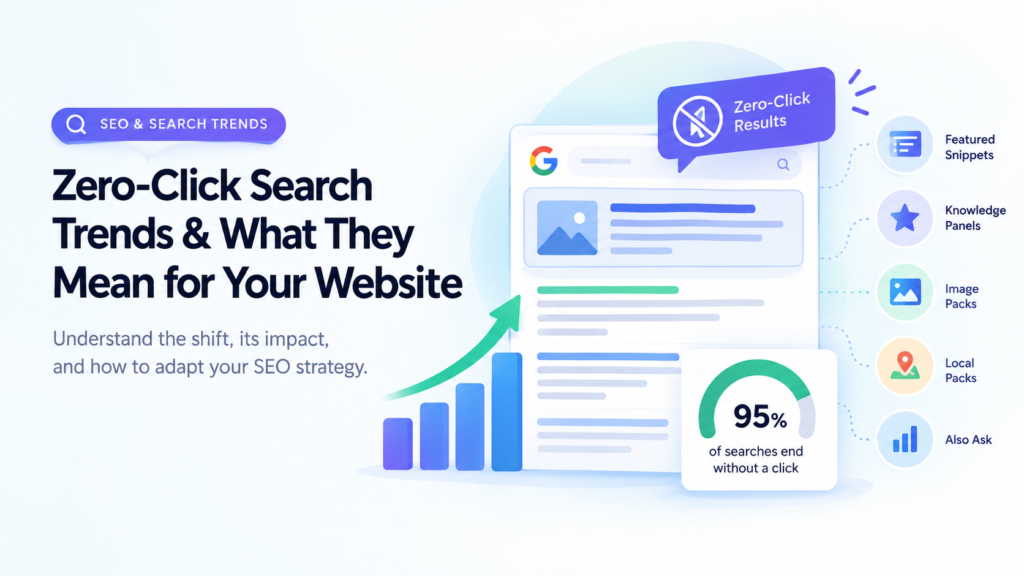
A search for “best time to post on Instagram”, “GST calculator” or “is electrolyte water worth it?” can now end before a website earns a visit. Google answers the question on the results page, often with an AI-generated summary, a featured snippet, a map result, a product carousel or a knowledge panel. That is the commercial reality behind zero click search trends: search visibility is still valuable, but a top ranking no longer guarantees traffic.
For Australian businesses, this is not a reason to abandon SEO. It is a reason to stop treating organic search as a traffic channel alone. Search is increasingly a demand-capture system that can influence awareness, consideration, store visits, branded searches and revenue without producing a clean session in analytics.
What zero-click search actually means
A zero-click search occurs when someone completes their task on the search results page without selecting an unpaid or paid website result. The term includes classic SERP features such as direct answers, local packs, flight and shopping modules, but it has become more consequential as AI Overviews expand the amount of information displayed before a click is needed.
The scale varies by country, query type, device and study methodology. SparkToro and Datos reported that 58.5% of US Google searches ended without a click to the open web in 2024. That figure should not be copied directly into an Australian forecast, but the direction is clear. Informational searches are increasingly resolved inside Google’s interface.
Pew Research Centre’s 2025 analysis of Google searches also found users clicked a traditional result on 8% of pages containing an AI summary, compared with 15% of pages without one. The finding is not a universal click-through-rate benchmark, but it demonstrates the central issue: when the answer is visible, the incentive to visit falls.
The key distinction is intent. A person checking a definition may be satisfied by a two-sentence answer. A procurement manager comparing platforms, or a shopper choosing between products, still needs evidence, detail, pricing, reviews and reassurance. Zero-click pressure is highest where the question has a simple, low-risk answer.
Why zero-click search trends matter to revenue
The lazy response is to call every lost click a lost opportunity. That is rarely true. Many zero-click queries were never likely to become profitable sessions. Chasing them can inflate reporting while consuming content, technical and link-building resources that would perform better elsewhere.
The real risk is strategic blindness. If a brand measures SEO only by sessions, it may conclude that organic performance is weakening while its content is actually appearing more often in answer surfaces. Conversely, a growing number of impressions can mask a serious decline in visits from high-intent commercial queries.
This changes the executive question from “How much organic traffic did we get?” to “Which search visibility creates qualified demand, and can we prove its contribution to revenue?” That is a more useful standard for a growth channel built to move revenue.
Queries most exposed to answer-first behaviour
Definition, calculation, weather, sport, basic health, celebrity, opening-hours and simple how-to searches are particularly exposed. So are broad research queries where Google can assemble a credible summary from multiple sources.
Commercial searches are less binary. “Best CRM for Australian small business” may surface an AI Overview, but the buyer often needs feature detail, implementation requirements, local support, security documentation and independent proof before acting. The click may be delayed, not removed.
Local businesses face a separate version of the problem. A customer can call, request directions, read reviews or check trading hours directly from a Google Business Profile. For a café, clinic or retailer, these are meaningful outcomes even when website sessions decline. For a service business with longer sales cycles, profile interactions should complement, not replace, a website designed to qualify and convert leads.
The metric shift: measure value, not just visits
Organic reporting needs a wider scorecard. Search Console remains essential for impressions, clicks, average position and query-level movement, but it cannot show every answer-surface appearance or every downstream conversion. GA4 can show sessions and conversions, yet it will understate journeys that begin with an impression and return later through brand, direct or paid channels.
Use a blended view that combines search visibility with commercial outcomes. The right mix depends on the business model, but a practical scorecard includes:
- Non-brand organic clicks and click-through rate, segmented by informational, commercial and transactional intent.
- Organic-assisted revenue, qualified leads and conversion rate, not only last-click conversions.
- Branded search growth and direct traffic trends as indicators of demand creation.
- Google Business Profile calls, direction requests and website actions for local operators.
- Share of visibility across organic results, shopping results, maps and AI-generated answer surfaces where tools can measure them reliably.
Do not mistake correlation for causation. A lift in branded search can come from TV, PR, paid social, distribution growth or seasonality. The answer is not to ignore the metric. It is to interpret it alongside media activity, market conditions and controlled tests.
How to respond without producing more content for its own sake
The winning response is not publishing hundreds of generic explainers in the hope Google cites one. AI-generated answers make undifferentiated information cheaper and less defensible. Brands need content that supplies the details a summary cannot safely compress.
Build pages around decisions, not just questions
Answer the immediate question early, then earn the visit with substance. A strong commercial guide might include Australian pricing ranges, product specifications, decision criteria, original photography, comparison methodology, implementation constraints and clear next steps. This is where expertise converts an answer into a decision.
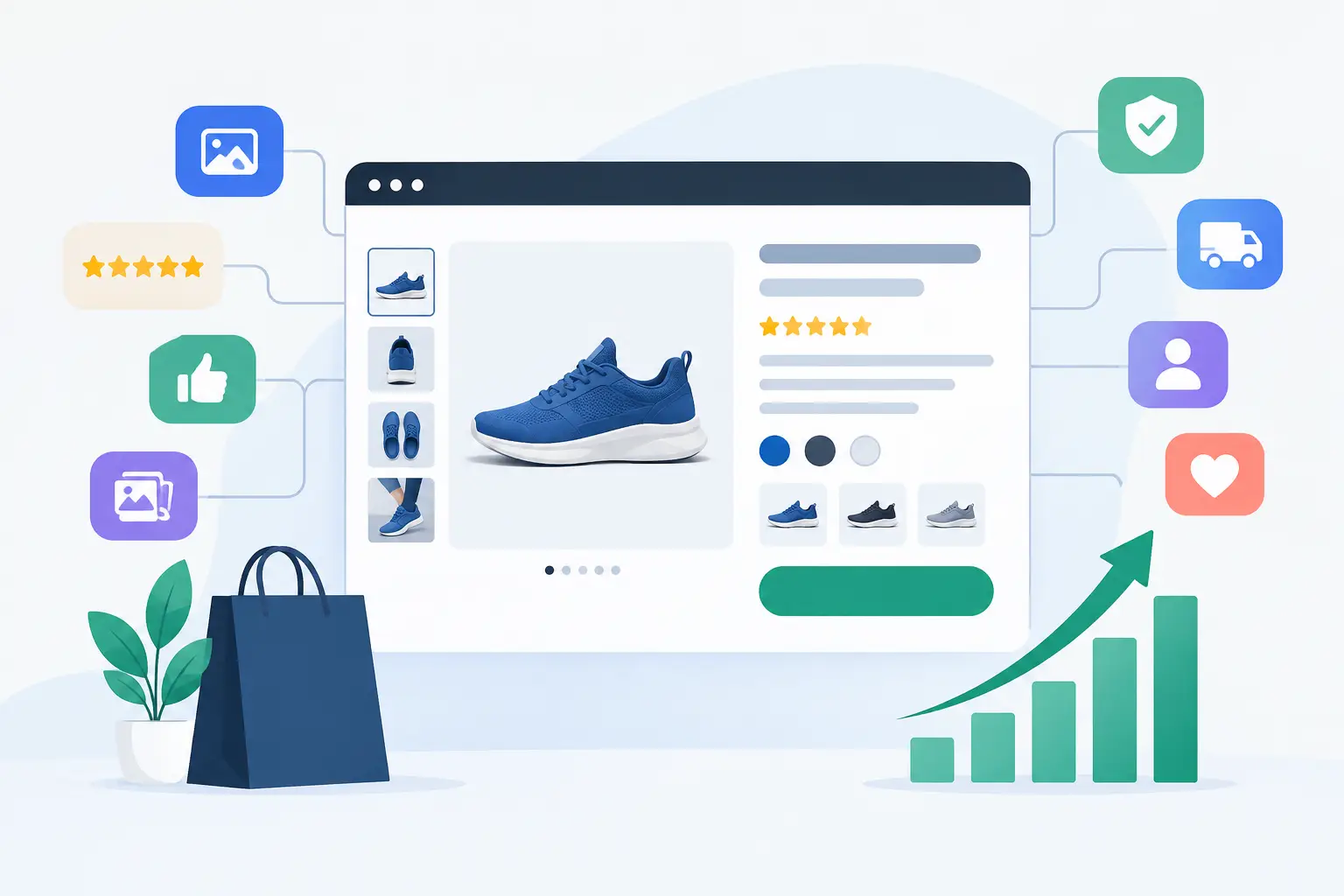
For example, an eCommerce retailer should not rely on a page that merely defines “best running shoes for flat feet”. It should help shoppers filter by stability level, weekly distance, terrain, fit, returns policy and stock availability. The definition can be summarised. The buying confidence cannot.
Make source quality visible
Search engines and users need reasons to trust your information. Attribute claims to named experts where appropriate, explain how products are tested, show publication and review dates, and correct outdated advice. For regulated, financial or health-adjacent topics, expert review and careful claims are commercial risk controls as much as SEO practices.
Structured data can help machines interpret a page, but it is not a shortcut to an AI Overview or rich result. Apply it accurately to eligible content, then focus on page quality, crawlability, internal information architecture and first-party evidence.
Protect high-intent journeys
Audit the queries that historically produce revenue, leads or valuable assisted conversions. Look for falling click-through rate, new SERP features, ranking changes and competitor displacement. Then decide whether the response is better content, a sharper landing page, product feed optimisation, local profile improvement or paid search coverage.
This is where trade-offs matter. A broad informational article may create future demand, but it should not absorb the same investment as a category page or service page driving qualified enquiries now. Prioritise by revenue potential, competitive difficulty and the gap between current visibility and commercial value.
AI search increases the value of owned demand
The long-term lesson is uncomfortable but useful: renting attention from a results page has always carried risk. Search interfaces change. Tracking changes. Referral data becomes less complete. Brands that depend on a single discovery mechanic are exposed.
Build assets that retain value after the initial search impression: a useful email programme, comparison tools, calculators, customer education, strong product data, reviews and a recognisable point of view. These assets create reasons for people to seek out your brand directly rather than repeatedly asking a generic search engine.
That does not mean hiding information behind forms or refusing to answer straightforward questions. Be generous with useful facts. Just make sure your best commercial value lies beyond what can be copied into a short answer box.
A practical 90-day response plan
Start by grouping Search Console queries into answerable informational, local action, commercial research and transactional intent. Compare the last three to six months of impressions, clicks, click-through rate and conversions. Investigate material changes rather than reacting to every fluctuation.
Next, identify pages with strong impressions but declining click-through rates. Review the live results page on mobile and desktop. Is an AI Overview, featured snippet, map pack, shopping block or competitor result taking attention? The SERP, not the ranking report alone, reveals the actual competitive environment.
Then improve the pages where a click has clear commercial value. Add first-party proof, decision support, accurate product or service detail and conversion paths matched to intent. Finally, establish a monthly visibility-to-revenue review with SEO, paid media, analytics and sales stakeholders. Zero-click behaviour crosses channel boundaries, so measurement should too.
Zero-click search does not make organic growth obsolete. It makes shallow SEO obsolete. The brands that win will be the ones that treat search visibility as one measurable part of a wider system for earning attention, trust and profitable customer action.