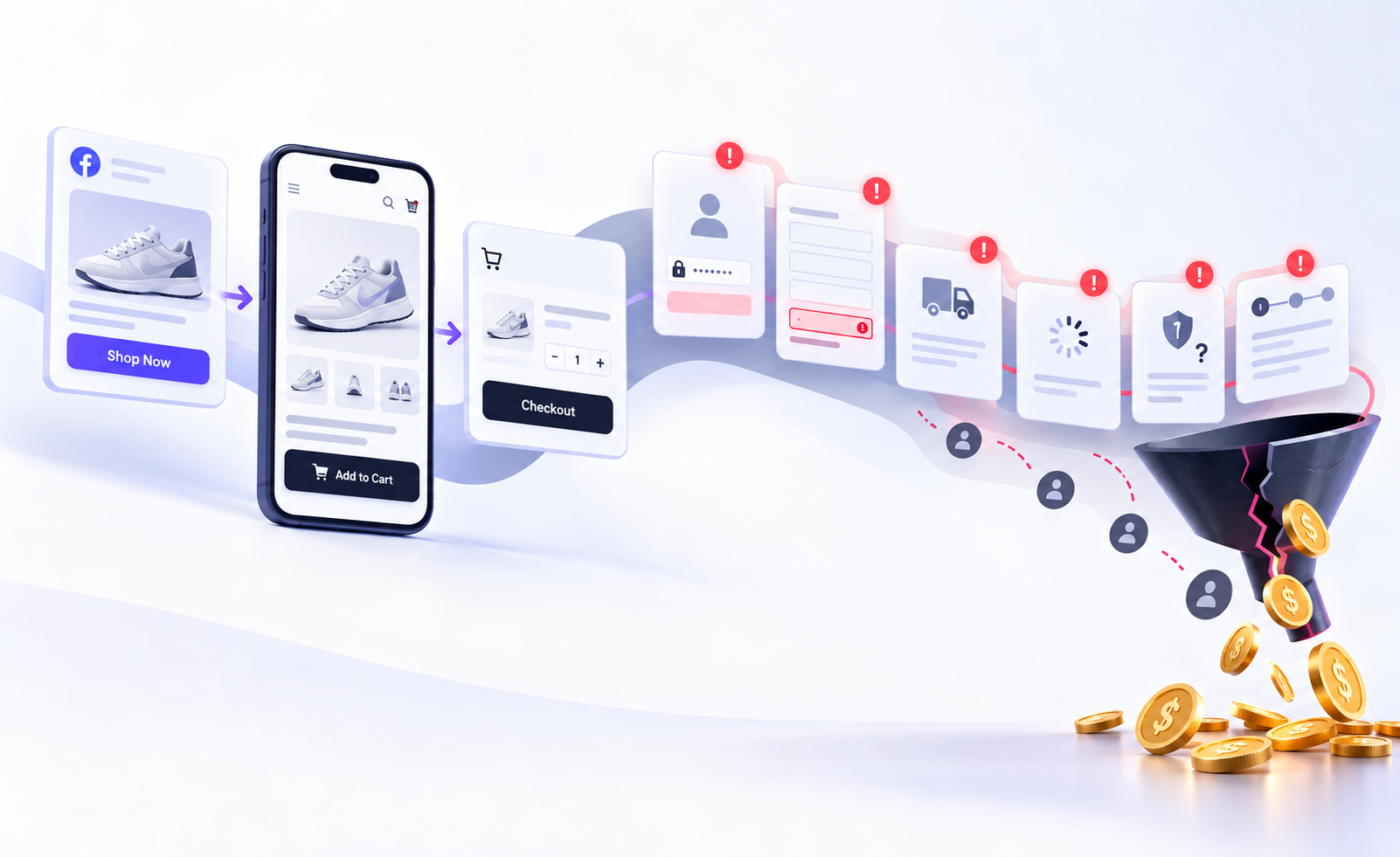
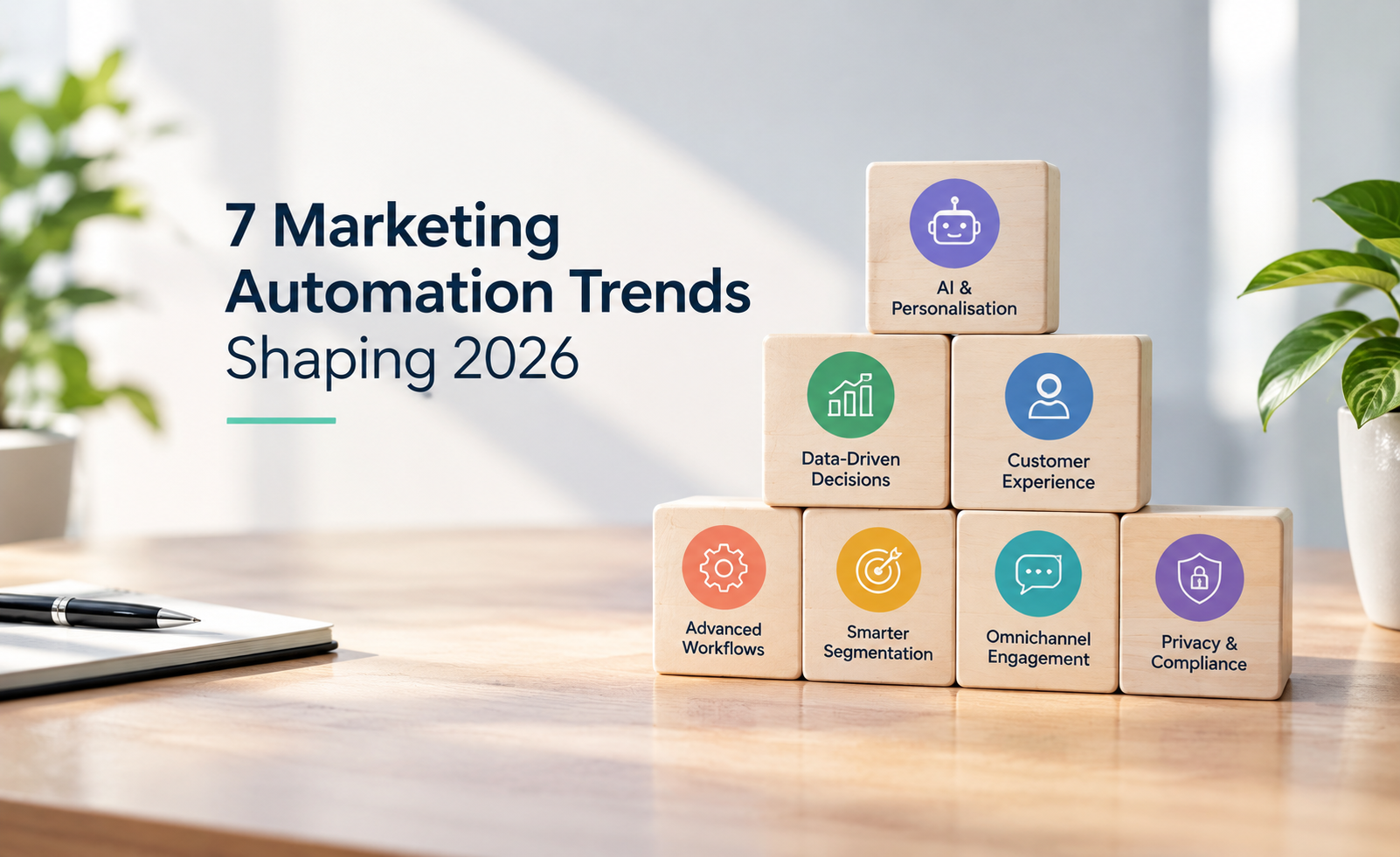

A high-intent shopper views the same product twice, abandons their cart, then receives a generic newsletter three days later. That is not an automation failure. It is a strategy failure.
The most valuable marketing automation trends for 2026 are moving away from more messages and towards better decisions: when to intervene, what to say, which channel deserves the next touch, and when to stop. For Australian marketers operating with tighter acquisition economics and rising customer expectations, automation needs to be built to move revenue, not simply increase send volume.
Key takeaways
- AI is becoming useful when it improves specific workflow decisions, not when it produces more generic content.
- First-party data and consent design now shape the quality of every automated journey.
- Lifecycle automation is being measured against incrementality, retention and margin, rather than clicks alone.
- The best programmes connect CRM, paid media, analytics and conversion rate optimisation around a shared customer view.
1. AI moves from content production to decision support
Most teams have already experimented with generative AI for email copy, ad variations and campaign briefs. That work can save time, but it is rarely the highest-value application. The bigger shift is using AI to help marketers prioritise action.
Consider an eCommerce retention programme. Rather than sending a standard replenishment email based solely on days since purchase, a smarter model can weigh product usage cycles, category affinity, prior response behaviour, stock availability and predicted likelihood to buy. A human still sets the commercial rules and reviews the output. This turns automation into a more deliberate part of the digital marketing strategy, rather than simply a way to produce more content.
This distinction matters. More content does not automatically create more demand. Better next-best-action logic can reduce wasted impressions, protect margin and give customers a more relevant experience.
For 2026, start with bounded use cases: lead scoring, churn-risk flags, product recommendations, intent classification and customer-service hand-offs. Each has a clear input, a defined action and a measurable commercial outcome. Avoid deploying AI across every journey before the underlying data and governance are ready.
2. First-party data becomes automation infrastructure
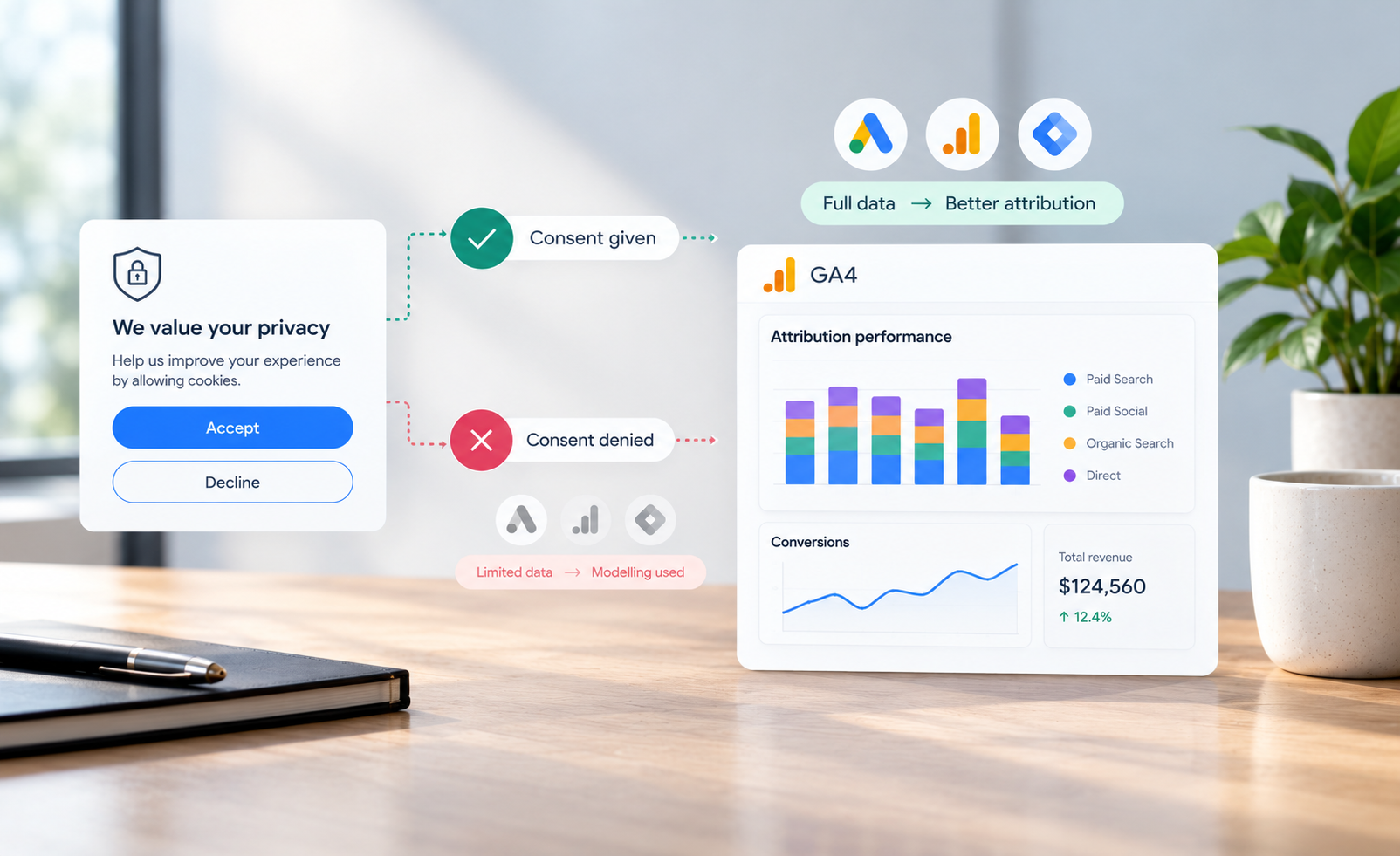
Privacy changes are not a side project for legal teams. They are reshaping the inputs available to marketing systems. As third-party identifiers become less dependable, brands need to earn, organise and activate first-party data with greater discipline.
That means more than collecting an email address at checkout. Useful first-party data combines declared preferences, purchase history, website behaviour, customer-service interactions and loyalty activity, all governed by clear consent rules. The Office of the Australian Information Commissioner’s guidance remains a practical reference point: businesses should collect only what they need, explain why they need it and keep it secure.
The trade-off is clear. Asking for too much information too early can reduce conversion. Asking for nothing limits relevance later. Progressive profiling is often the stronger approach. Capture the minimum required to begin a relationship, then offer a genuine reason for customers to share preferences over time.
For example, a retailer may ask a new subscriber to select preferred categories after they have received a useful welcome offer, rather than placing six mandatory fields in the initial sign-up form. That creates a cleaner exchange of value and better segmentation without unnecessary friction.
3. Trigger-based journeys are becoming lifecycle systems
A cart abandonment flow is still useful. It is not a lifecycle strategy.
Leading automation programmes map the customer journey from first visit through to repeat purchase, referral, reactivation and, where appropriate, win-back. They recognise that the right message for a first-time buyer is rarely right for a high-value repeat customer.
The practical shift is from campaign calendars to decision frameworks. Define the customer states that matter to the business, then identify the signals that move someone between them. A subscriber may become an engaged prospect after repeated category views. A buyer may become at-risk after missing their normal repurchase window. A VIP customer may require service-led communication rather than another discount.
A useful framework is:
Signal + customer state + commercial objective = automation decision
If a customer has purchased twice in 90 days, viewed a complementary category and has not used a welcome incentive, the objective may be cross-sell at full margin. If another customer has ignored five promotional emails, the objective is not another promotion. It may be frequency reduction, a preference-centre prompt or a pause.
This protects deliverability and prevents a common mistake: treating every customer behaviour as a reason to send more email.
4. Paid media and CRM automation are being planned together
For years, paid acquisition and CRM have often operated as separate functions. One team pays to bring people in; another attempts to retain them. That separation makes it difficult to see where growth is actually coming from.
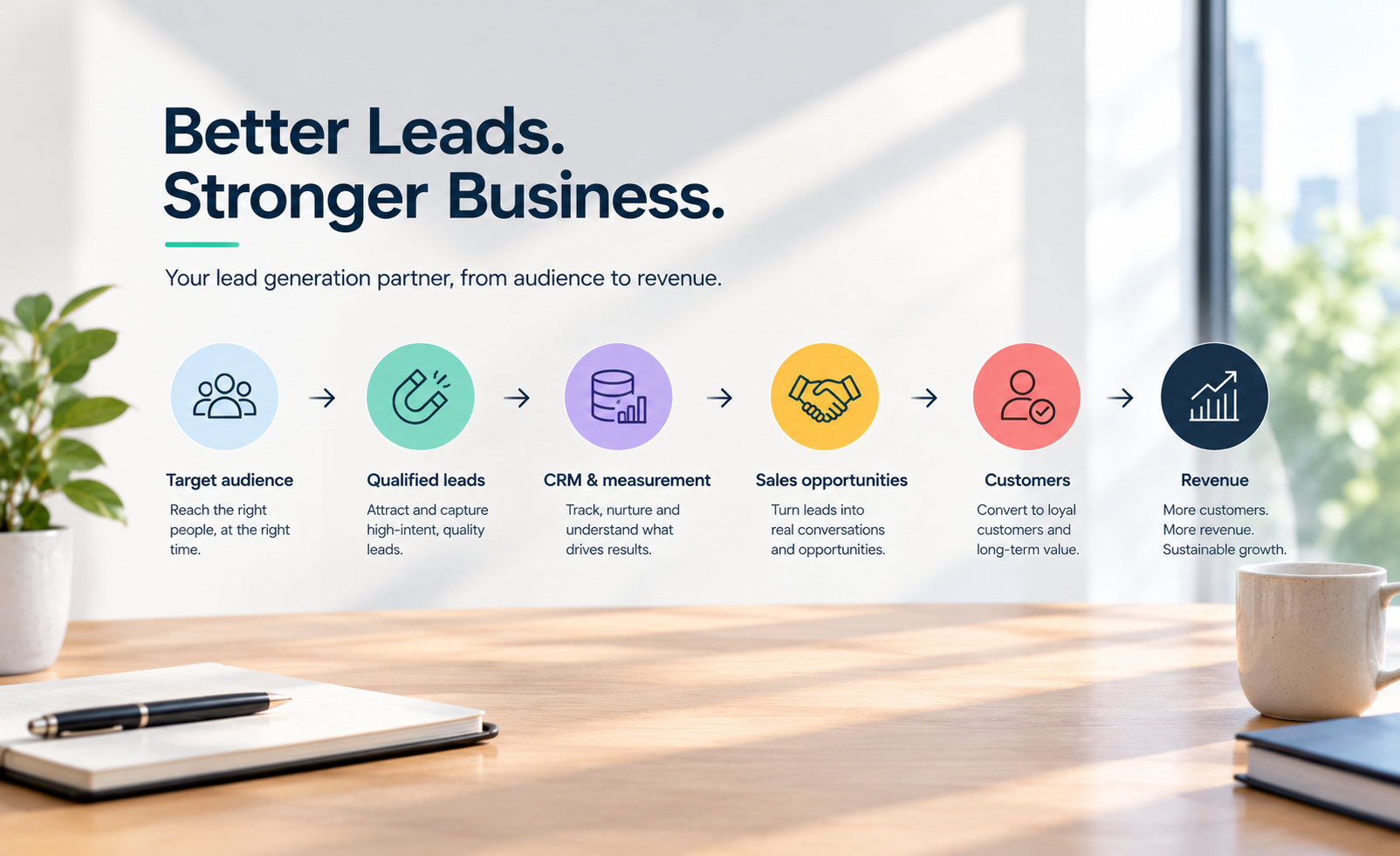
The stronger model connects audience strategy across the funnel. CRM signals can suppress recent purchasers from acquisition campaigns, create retention audiences for paid social, or identify high-value customer patterns that inform performance marketing services. Paid media data can also reveal the message, offer or category that first attracted a customer, improving subsequent onboarding.
This does not mean uploading every available customer field into every advertising platform. Australian businesses need purpose limitation, consent controls and a clear view of what data is being activated. It also requires realistic expectations. Platform-reported conversions are useful operational signals, but they are not a complete account of incrementality.
The commercial question is simple: did coordinated activity create more profitable customers than isolated channel activity? Your measurement plan should be designed to answer that before the campaign launches.
5. Measurement shifts from activity metrics to incrementality
Marketing automation platforms provide visibility into opens, clicks, sends, revenue attributed and journey completion rates. These are useful diagnostics. They are not enough to establish causation.
An abandoned-cart email may appear to generate substantial revenue because it receives credit for orders that would have happened anyway. A win-back offer may lift short-term conversion while training customers to wait for discounts. Without a control group, marketers can mistake correlation for impact.
Where volume allows, use holdout testing. Withhold a small, random segment from a journey and compare its behaviour with the exposed group. The difference is a more credible estimate of incremental value. For lower-volume businesses, test one major journey at a time and combine experiment results with cohort analysis, repeat-purchase trends and contribution margin.
| Metric | What it tells you | What it can miss |
|---|---|---|
| Open and click rate | Creative and engagement signals | Revenue quality and long-term value |
| Platform-attributed revenue | Operational performance | Orders that may have happened anyway |
| Incremental revenue | Estimated causal impact | Requires testing discipline |
| Contribution margin | Commercial value after costs | May need cleaner cost allocation |
The challenge is turning those measures into a management view that leadership can actually use. Marketing dashboards can bring campaign, customer and revenue measures into one reporting view, making it easier to see whether automation is changing commercial outcomes.
This is where automation becomes a measurable growth system rather than a reporting exercise.
6. Journey orchestration includes the website and service team
Customers do not experience channels as separate departments. They experience a brand. If an email promotes an item that is out of stock, a paid ad sends them to an irrelevant landing page, or support cannot see a recent complaint, the automation has created friction rather than value.
The trend is towards orchestration across owned channels: email, SMS, mobile messaging, website personalisation and customer service. The exact channel mix depends on the business. SMS can be effective for time-sensitive service updates or high-consideration reminders, but it is intrusive when used as a replacement for every email. Website personalisation can improve relevance, but only if it is fast, accurate and based on meaningful signals.
Start by fixing hand-offs that create visible customer pain. Post-purchase delivery updates, back-in-stock notifications, returns communication and lead-to-sales routing often produce more immediate value than elaborate personalisation projects.
7. Automation governance becomes a growth advantage
As automation expands, so does the risk of duplicated logic, inconsistent offers and invisible leakage. A customer might enter a sale sequence, a VIP reward journey and a win-back flow at the same time. Without journey priorities and suppression rules, they receive conflicting messages and the business gives away margin.
Create a simple governance model. Every journey should have an owner, a stated objective, eligibility rules, frequency limits, a measurement method and a review date. Keep a central register of active automations so teams can see overlaps before they become customer-facing problems.
This is not bureaucracy for its own sake. It gives marketing leaders a clearer view of where effort is producing measurable success, where customers are being over-contacted and which journeys are safe to retire. It also brings automation closer to the broader principles behind AI marketing that actually moves revenue: use technology where it improves a commercial decision, not simply because the technology is available.
Build fewer automations with higher standards
The 2026 opportunity is not to automate every interaction. It is to identify the moments where relevance, timing and commercial intent genuinely improve the customer relationship. Begin with one high-value journey, establish a credible baseline, test its incremental effect and improve the system around it. That is how automation earns its place in a growth strategy.