

Revenue rarely follows the neat path shown in a platform dashboard. A customer might discover a brand through TikTok, compare options through Google, return via email and convert after a branded search. The best marketing attribution platforms help growth teams measure that messy reality well enough to make better budget decisions – not pretend every sale came from the last click.
For Australian businesses, the right choice depends less on which tool has the longest feature list and more on data maturity, sales cycle length, channel mix and the decisions the team needs to make each week. A Shopify brand spending across Meta, Google and email has a different attribution problem from a B2B firm with a six-month pipeline and offline sales conversations.
Key takeaways
- GA4 remains a useful baseline for digital journey analysis, but it is not a complete cross-channel attribution system.
- Platform reporting is necessary for campaign optimisation, yet each platform naturally gives itself more credit than an independent view will.
- Marketing mix modelling is increasingly valuable where privacy changes, walled gardens and offline media make user-level tracking incomplete.
- The strongest attribution programme combines clean first-party data, a clearly defined source of truth and disciplined testing.
What a marketing attribution platform should actually do
Attribution software has one commercial job: help allocate the next dollar more intelligently. That requires more than applying a first-click, last-click or linear rule to website sessions.
A capable platform should connect spend, touchpoints and outcomes across channels; handle identity resolution where consent and data quality permit; and let teams inspect results by campaign, creative, audience, product and time period. It should also make uncertainty visible. If a vendor claims it can precisely track every impression through to every sale in 2026, treat that as a warning sign rather than a selling point.
Privacy controls, consent mode, browser restrictions and the gradual loss of third-party identifiers have changed the category. The practical standard is now triangulation: use platform data for in-channel optimisation, analytics for behavioural diagnosis, and independent measurement or experiments to judge incremental value. Clean first-party data collection is increasingly the foundation of any reliable attribution system.
The 9 best marketing attribution platforms
The platforms below are not interchangeable. Each is built around a particular measurement model, operating environment and level of investment.
| Platform | Best suited to | Primary strength | Watch-out |
|---|---|---|---|
| Google Analytics 4 | Most digital businesses | Accessible journey and conversion analysis | Limited cross-platform incrementality |
| Triple Whale | Shopify-led eCommerce brands | Fast commerce and paid social reporting | Best fit is concentrated in eCommerce |
| Northbeam | High-spend DTC brands | Multi-touch and blended performance views | Requires meaningful media volume |
| Rockerbox | Enterprise eCommerce | Flexible customer journey measurement | More setup and governance required |
| Dreamdata | B2B revenue teams | Connects marketing touches to pipeline | Depends on strong CRM hygiene |
| HockeyStack | B2B SaaS teams | Product, revenue and account-level analysis | Can be more than a lean team needs |
| Adobe Customer Journey Analytics | Large enterprises | Deep, configurable cross-channel analysis | Significant implementation commitment |
| AppsFlyer | Mobile app businesses | Mobile measurement and fraud prevention | Primarily built for app ecosystems |
| Nielsen Marketing Mix Modelling | Brands with broad media investment | Measures channel contribution at aggregate level | Less granular for daily optimisation |
1. Google Analytics 4
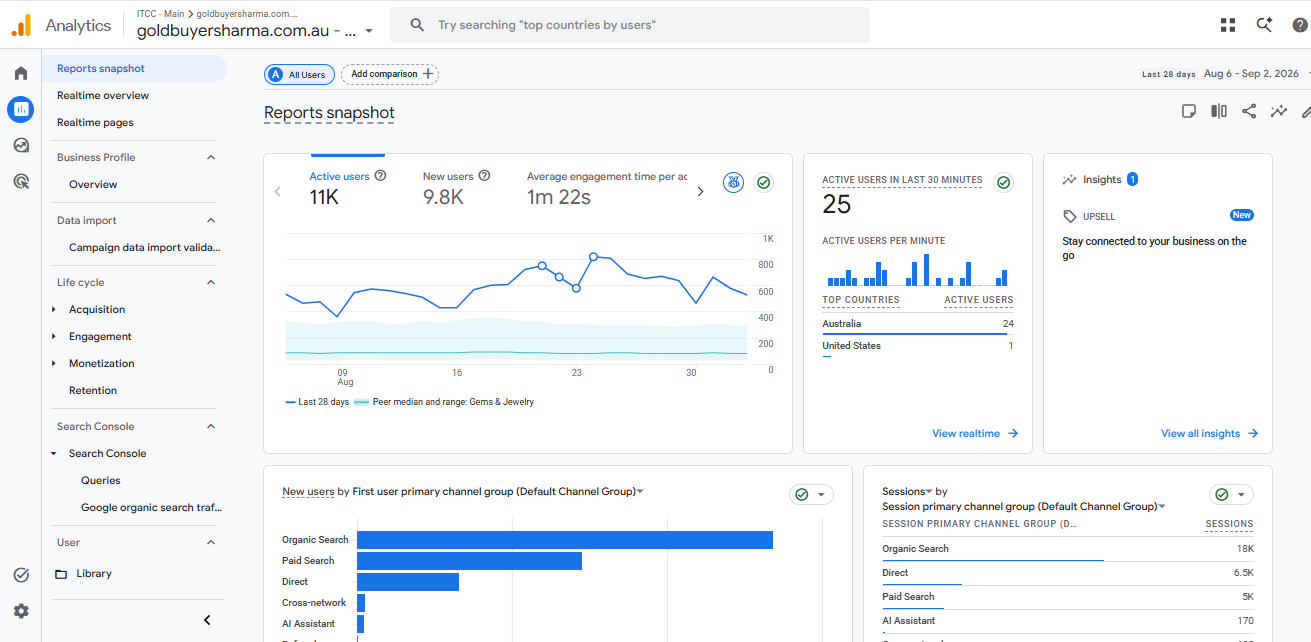
GA4 is the logical starting point for most businesses because it provides event-based measurement, cross-device modelling features and integration with Google advertising products. Its attribution reports can expose assisted conversions and common conversion paths that last-click reports hide.
However, GA4 should be treated as a diagnostic layer, not the final word on media effectiveness. It cannot independently resolve every customer identity, and its view of non-Google walled gardens is constrained by available data. Correct event configuration is foundational: if conversion events are not properly tracked, no downstream platform will fix the problem. Use GA4 to understand site behaviour, channel interactions and conversion trends, then validate major budget decisions with tests.
2. Triple Whale

Triple Whale is built for eCommerce operators who need an operational view of store revenue, paid social performance and customer acquisition efficiency. Its appeal is speed: teams can bring Shopify, advertising and retention data into a more usable reporting environment without commissioning a major data project.
It is especially useful for brands where Meta and Google dominate acquisition. The trade-off is that it is less compelling for complex B2B journeys, marketplaces or businesses where a substantial share of revenue closes offline.
3. Northbeam
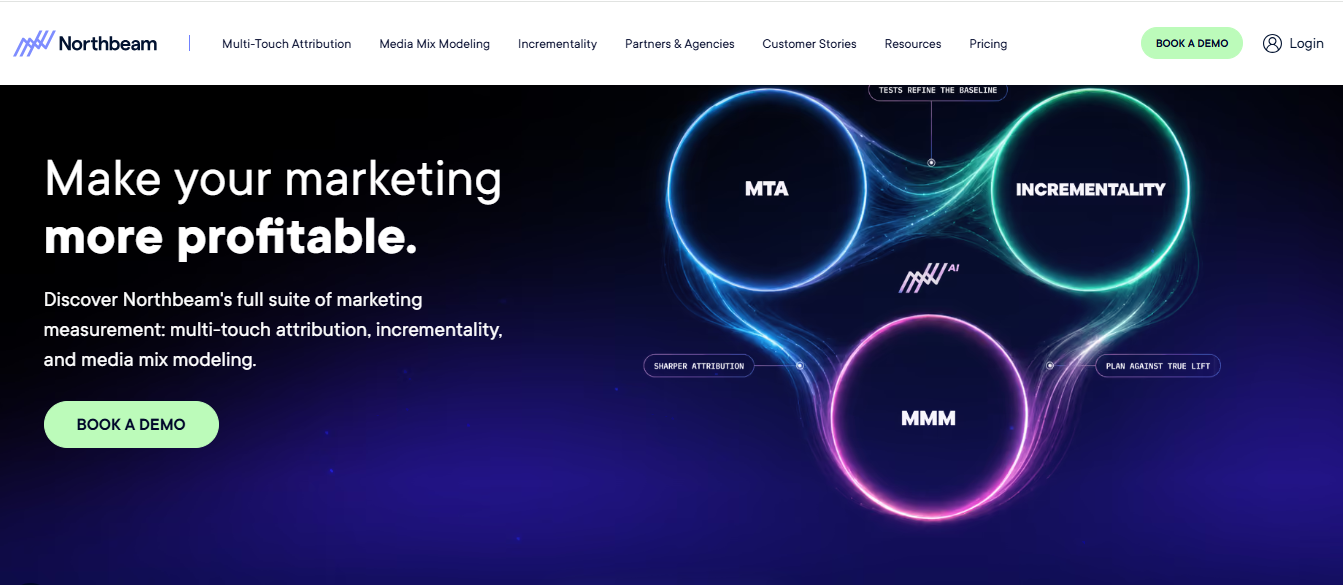
Northbeam is a strong option for established DTC brands investing heavily across multiple paid channels. It focuses on giving marketers a more independent read on blended performance and multi-touch customer journeys, rather than relying solely on ad-platform reporting.
The platform earns its keep when media volume is high enough for attribution differences to affect real budget allocation. Smaller brands with modest spend may get more value by first fixing product feeds, tracking plans and basic reporting discipline.
4. Rockerbox

Rockerbox suits enterprise eCommerce teams that need configurable attribution across complex acquisition and retention programmes. It can support detailed customer journey analysis, data integrations and measurement approaches that go beyond a standard web analytics setup.
That flexibility has a cost: implementation is not merely a subscription decision. Teams need agreed conversion definitions, reliable campaign naming and ownership across marketing, analytics and engineering. Without those foundations, sophisticated dashboards simply report sophisticated noise.
5. Dreamdata
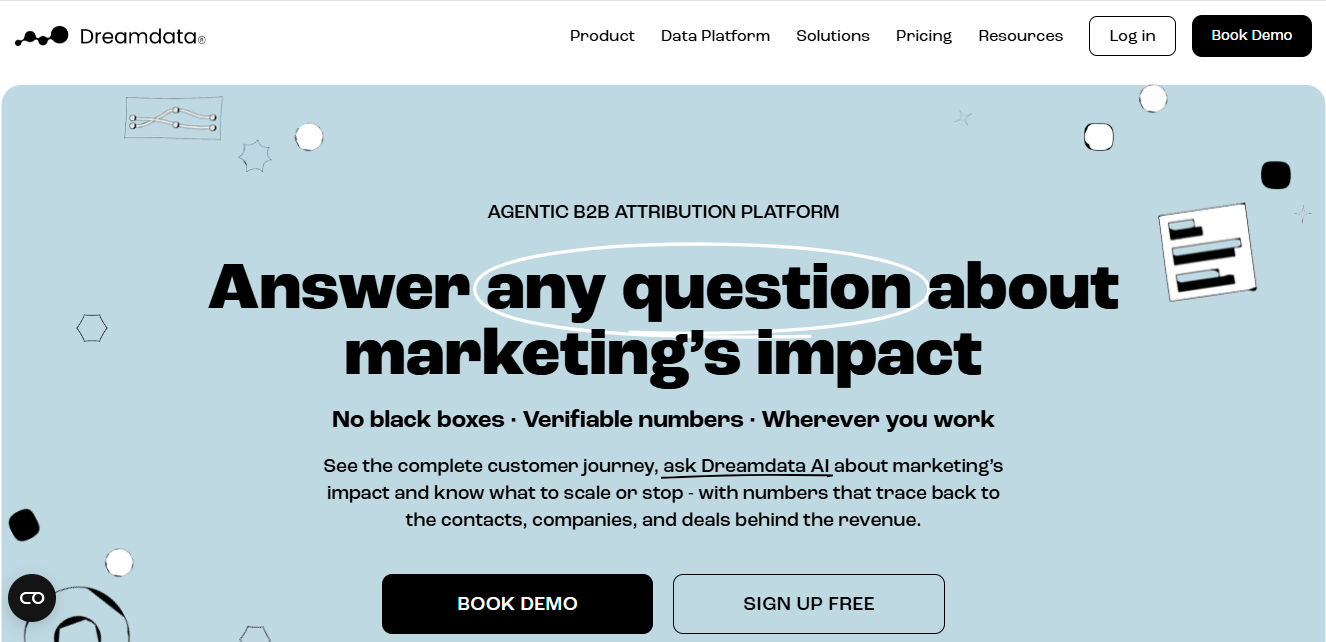
Dreamdata is designed for B2B organisations where the meaningful conversion is not a website sale but a qualified opportunity, pipeline stage or closed-won deal. It connects web activity, advertising data, CRM records and other revenue signals to show how marketing contributes across a long buying cycle.
This makes it particularly relevant for Australian SaaS, professional services and high-consideration businesses. Its output is only as credible as the CRM beneath it. If sales reps do not consistently record opportunity sources, contacts and lifecycle stages, solve that operating problem first.
6. HockeyStack
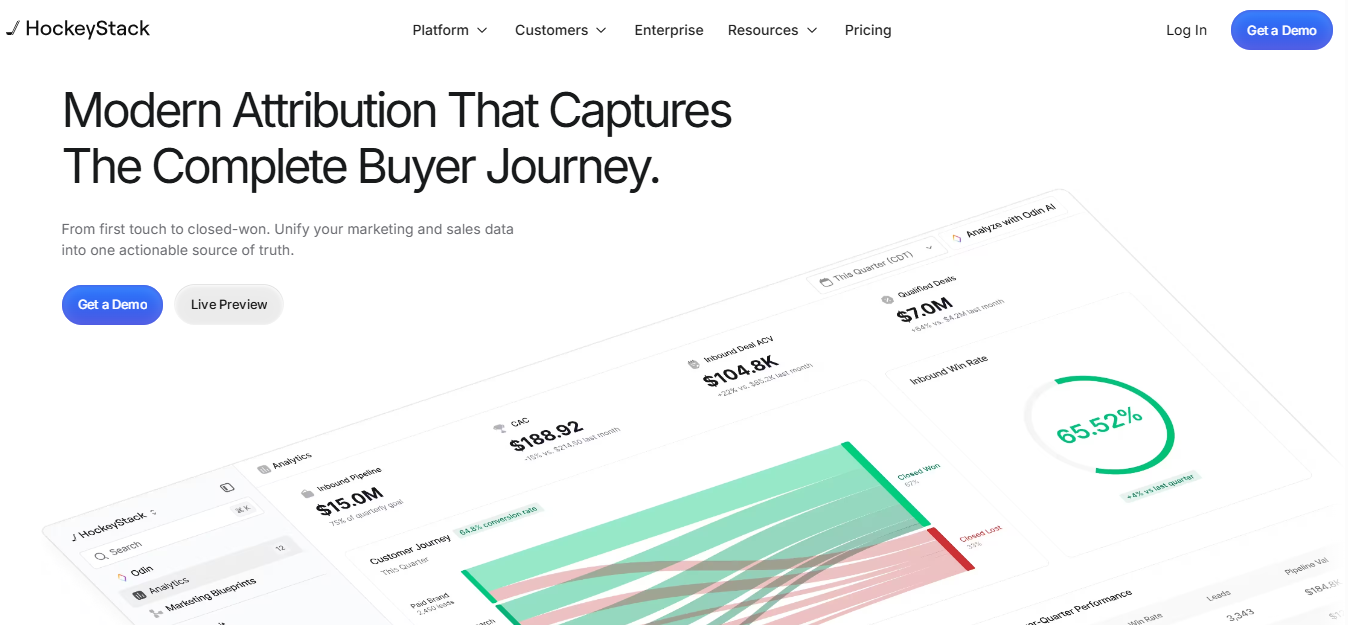
HockeyStack also targets B2B teams, with a sharper emphasis on account journeys, revenue intelligence and product-led growth signals. It is useful where buyers research anonymously before identifying themselves, and where multiple stakeholders influence a deal.
For CMOs, the value is moving the conversation from lead volume to revenue contribution. For performance teams, it helps identify which campaigns create accounts that progress, rather than campaigns that merely produce form fills.
7. Adobe Customer Journey Analytics
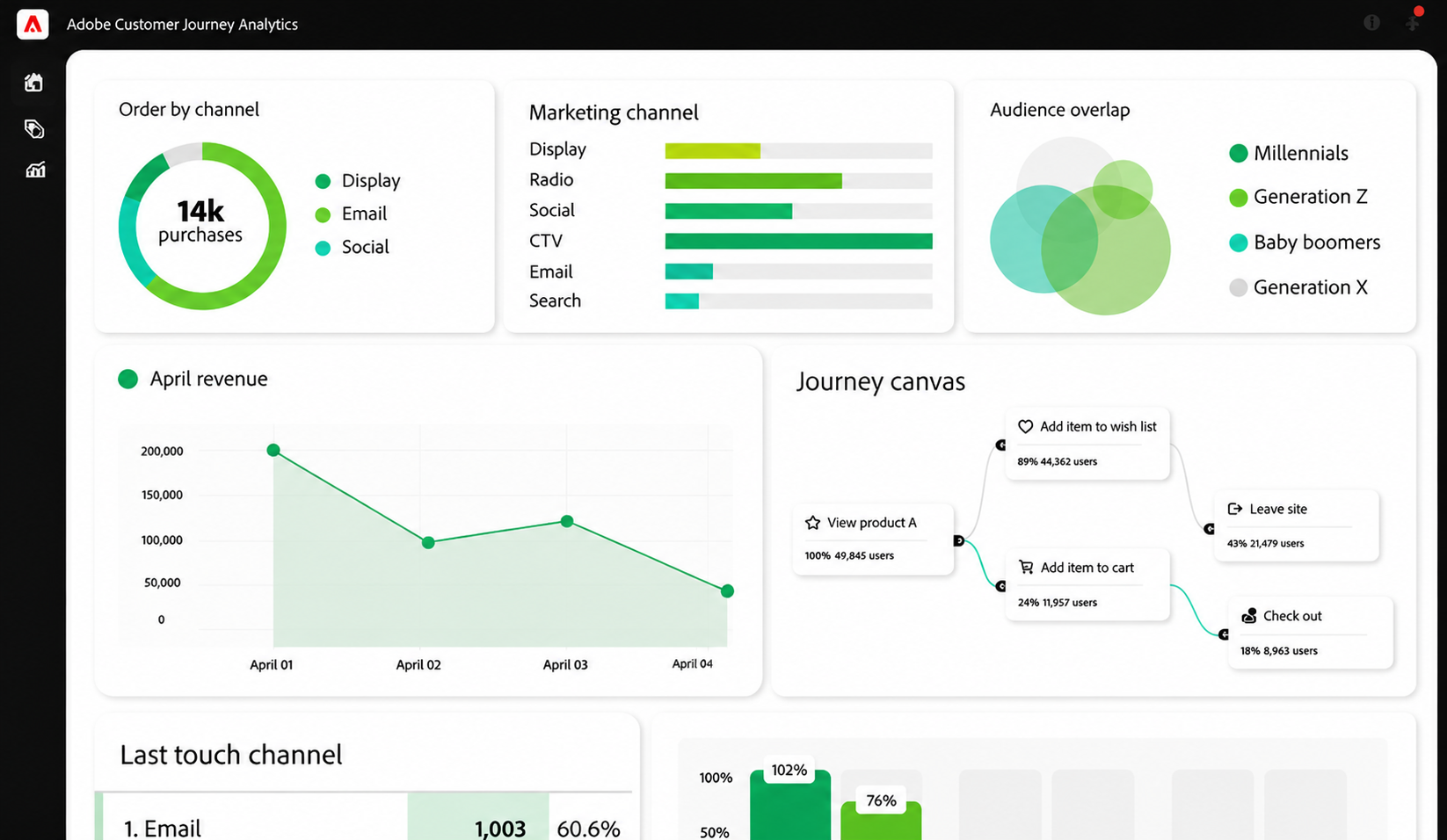
Adobe Customer Journey Analytics is an enterprise-grade option for organisations with substantial first-party data, multiple digital properties and dedicated analytics resources. It supports highly configurable analysis across online and offline data sources.
This is not a shortcut for teams lacking measurement maturity. It is a powerful environment, but requires implementation expertise, data governance and a clear measurement architecture. It makes sense where fragmented data is a material barrier to revenue decisions.
8. AppsFlyer

For app-first businesses, AppsFlyer is one of the most relevant measurement platforms. It focuses on mobile attribution, campaign measurement, privacy-aware data handling and mobile fraud prevention.
Its importance has grown as Apple’s App Tracking Transparency framework and privacy changes reshape how mobile acquisition is measured. App teams should pair it with product analytics and retention reporting, because an install is not evidence of profitable acquisition.
9. Nielsen Marketing Mix Modelling

Marketing mix modelling, or MMM, answers a different question from user-level attribution: how much did each channel contribute to outcomes over time? Nielsen’s approach is suited to larger advertisers running broad media mixes that may include television, out-of-home, audio, retail and digital activity.
MMM is less useful for deciding tomorrow morning’s keyword bid. It is valuable for quarterly or annual budget allocation, particularly when tracking gaps make person-level paths incomplete. The best organisations use MMM alongside conversion lift tests and digital attribution, rather than asking one method to answer every question.
How to choose between attribution platforms
Start with the decision, not the dashboard. If the immediate question is whether Meta prospecting is profitable for a Shopify store, an eCommerce-focused platform plus a disciplined testing plan may be enough. If the question is which channels create qualified pipeline across a 180-day sales cycle, prioritise a B2B revenue attribution tool with CRM depth.
Then assess your data reality. A useful readiness check covers four areas: consistent UTM conventions, correctly configured conversion events, consent-aware first-party data collection, and a CRM or commerce platform that records actual revenue. Weakness in any one area will distort the output regardless of vendor.
Finally, define one primary metric. For eCommerce, this may be contribution margin after marketing spend, new-customer CAC or blended MER. For B2B, it may be qualified pipeline, pipeline velocity or revenue from target accounts. Avoid choosing a tool based on the number of attribution models it offers. The model matters less than whether it improves a real commercial decision.
Build a measurement system, not a vendor stack
Attribution becomes useful when it changes behaviour. Set a monthly cadence to compare platform-reported results against GA4 trends, CRM or store revenue, and controlled tests by building dashboards that surface both process and business metrics. When channels disagree, do not average the numbers and move on. Investigate what each system can and cannot observe.
A practical rule is to make large budget shifts only when at least two forms of evidence agree – for example, attributed revenue and a geo test, or platform efficiency and an MMM trend. This reduces the risk of cutting demand-creating activity simply because its impact arrives later or is difficult to track.
The best platform is the one your team can trust, operate and challenge. Build measurement around the decisions that move revenue, keep the data definitions honest, and let evidence – not the prettiest dashboard – determine where the next marketing dollar goes.